

Why the B2B Marketing Process Feels Like Herding Cats (And How to Fix It)
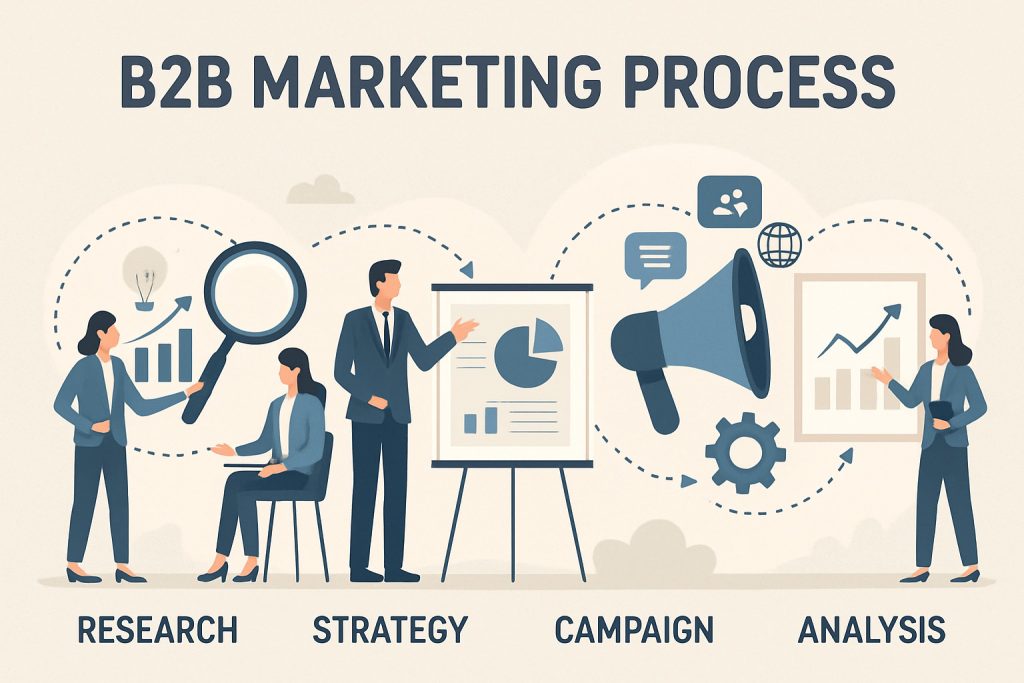
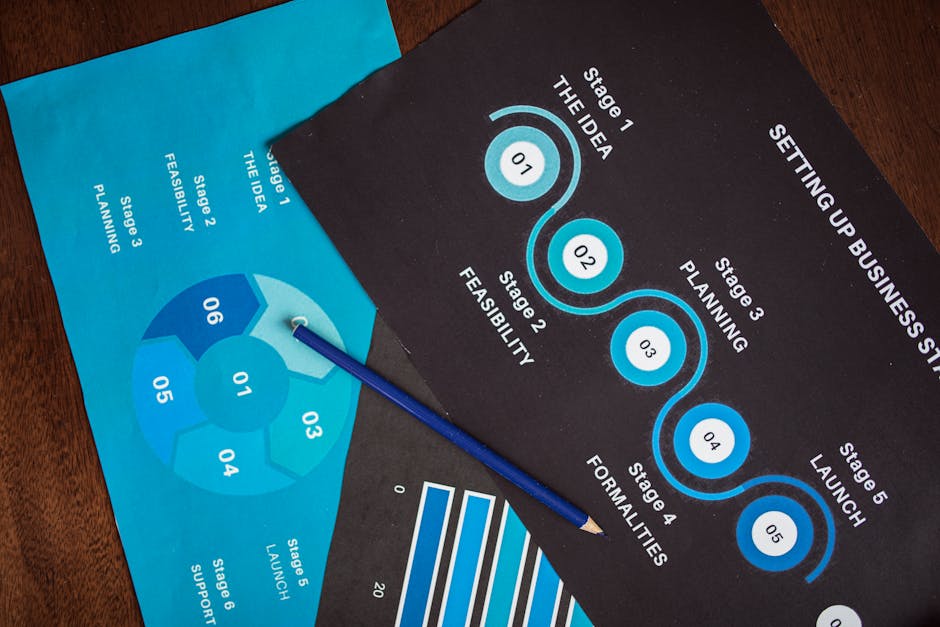
The B2B marketing process is a systematic approach to attracting, engaging, and converting business buyers through six key stages: research, strategy, planning, execution, measurement, and retention. Unlike B2C marketing, this process involves multiple decision-makers, longer sales cycles, and higher-stakes purchases.
The B2B Marketing Process at a Glance:
- Market & Audience Research - Define your ideal customer profile and buyer personas
- Strategy & Goal Setting - Establish SMART goals and value propositions
- Campaign Planning & Creation - Develop content and messaging frameworks
- Execution & Activation - Launch multichannel campaigns and nurture sequences
- Measurement & Optimization - Track KPIs and optimize performance
- Retention & Expansion - Drive customer success and advocacy
Here's the reality: B2B marketing isn't about viral moments or quick wins. You're dealing with complex buying committees who each gather multiple pieces of information independently before reaching consensus. That's a lot of moving parts.
The good news? When sales and marketing teams work together using a structured process, companies see significant improvements in customer retention and sales win rates. The key is treating B2B marketing as relationship architecture rather than a series of one-off campaigns.
This guide will walk you through each stage of the process with practical steps you can implement today - no fluff, no buzzwords, just what actually works.
Key B2B marketing process vocabulary:
Understanding B2B Marketing Fundamentals
Let's be honest - if you've ever tried to apply B2C marketing tactics to a B2B audience, you've probably wondered why your brilliant campaign fell flat. The truth is, B2B marketing operates in a completely different universe.
The biggest difference? You're not selling to one person making a quick decision. Instead, you're dealing with buying committees - typically multiple decision-makers who each gather several pieces of information independently before reaching consensus.
Logic drives the conversation, but emotions still matter. B2B buyers want ROI calculations and technical specifications, but they're also dealing with very human concerns - the fear of making a career-limiting mistake or the desire to look like the hero who found the perfect vendor.
This is where trust becomes your secret weapon. Many B2B marketers are investing more in brand-building because differentiation comes from being the vendor buyers actually want to work with.
| B2B Marketing Drivers | B2C Marketing Drivers |
|---|---|
| ROI and business outcomes | Personal satisfaction and lifestyle |
| Committee consensus | Individual preference |
| Long-term partnerships | Immediate gratification |
| Risk mitigation | Emotional connection |
The B2B Buying Journey
The B2B buying journey isn't a straight line - it's more like a maze where different stakeholders enter and exit at various points.
Problem identification happens when someone spots an issue or opportunity. Solution exploration is where buyers research independently before filling out contact forms. Requirements building gets technical as teams develop specifications and build business cases. Supplier selection involves active vendor evaluation, followed by validation through references and case studies, and finally, consensus building where all stakeholders align on the decision.
Why B2B ≠ B2C
Multiple stakeholders mean your messaging needs to speak to different roles simultaneously. Contract value changes everything - a single B2B deal might equal hundreds of B2C transactions. Longer cycles require nurturing sequences with stamina, not just sprint speed. Sales alignment becomes critical because marketing-qualified leads need human follow-up to close.
For deeper insights into these differences, this scientific research on B2B vs B2C differences provides additional context on buyer behavior patterns.
Understanding these fundamentals isn't just academic - it's the foundation that makes your entire B2B marketing process more effective.
The B2B Marketing Process Roadmap
Think of the B2B marketing process as building a bridge between your company and your ideal customers. The six-stage process transforms scattered marketing efforts into a growth engine. Companies that follow this structured approach typically see significant growth improvements compared to those who wing it.

Each stage builds on the previous one, with feedback loops that make the system smarter over time.
B2B Marketing Process Stage 1: Market & Audience Research
Everything starts with understanding your audience. Your ideal customer profile (ICP) becomes your North Star - examine your happiest, most profitable customers for patterns in company size, industry, and structure.
Buyer personas identify key decision-makers within target companies. For each persona, understand their responsibilities, success metrics, and daily challenges. Pain point analysis goes beyond surface problems to understand ripple effects. Your SWOT analysis should be brutally honest about strengths, weaknesses, opportunities, and threats.
For guidance on organizing research findings, check out our insights on documenting content strategy.
Stage 2: Strategy & Goal Setting
SMART goals provide focus and accountability. Instead of "get more leads," set specific targets like "Generate 150 marketing qualified leads from target accounts in Q1." Your value proposition articulates specific outcomes customers can expect and why those matter.
Market positioning determines how prospects perceive you relative to alternatives. Revenue operations alignment between marketing, sales, and customer success creates shared definitions and processes. When aligned, companies typically see improved customer retention and higher sales win rates.
Explore our comprehensive guide on RevOps for B2B businesses for deeper alignment insights.
Stage 3: Campaign Planning & Creation
Content pillars become your messaging foundation - three to five core themes addressing different buyer journey stages. Account-based marketing (ABM) plays create personalized experiences for high-value prospects through custom content and targeted outreach.
Your messaging matrix ensures consistency across touchpoints, while creative asset production brings messaging to life through various content formats. Campaign sequencing orchestrates how touchpoints work together throughout the customer journey.
For comprehensive content planning guidance, dive into our detailed B2B content strategy resource.
B2B Marketing Process Stage 4: Execution & Activation
Multichannel orchestration creates consistent experiences across all touchpoints. Email marketing segments by persona and buying stage, providing genuine value rather than just pushing for meetings. SEO and content distribution capture demand when prospects actively research solutions.
Social media engagement on LinkedIn builds relationships and thought leadership. Event marketing provides deeper engagement opportunities. Marketing automation ensures no prospect falls through the cracks with lead scoring and nurture workflows.
Explore proven B2B digital marketing ideas for tactical execution guidance.
Stage 5: Measurement & Optimization
KPI dashboards track performance across the entire funnel - from website traffic to customer satisfaction. Attribution modeling reveals which touchpoints contribute to conversions despite complex B2B buyer journeys.
A/B testing programs drive continuous improvement through systematic experimentation. Conversion rate optimization identifies and eliminates friction points. Performance reviews with sales and marketing teams ensure ongoing alignment.
Stage 6: Retention, Expansion & Advocacy
Customer success integration ensures smooth transitions from prospect to advocate. Expansion marketing identifies upselling and cross-selling opportunities. Referral programs leverage satisfied customers for new business generation.
Community building creates forums for customer experience sharing while lifecycle loops design processes where satisfied customers become case studies, referral sources, and expansion opportunities.
For detailed guidance on maximizing customer lifetime value, explore our comprehensive B2B lifecycle marketing guide.
High-Impact Tactics & Channels
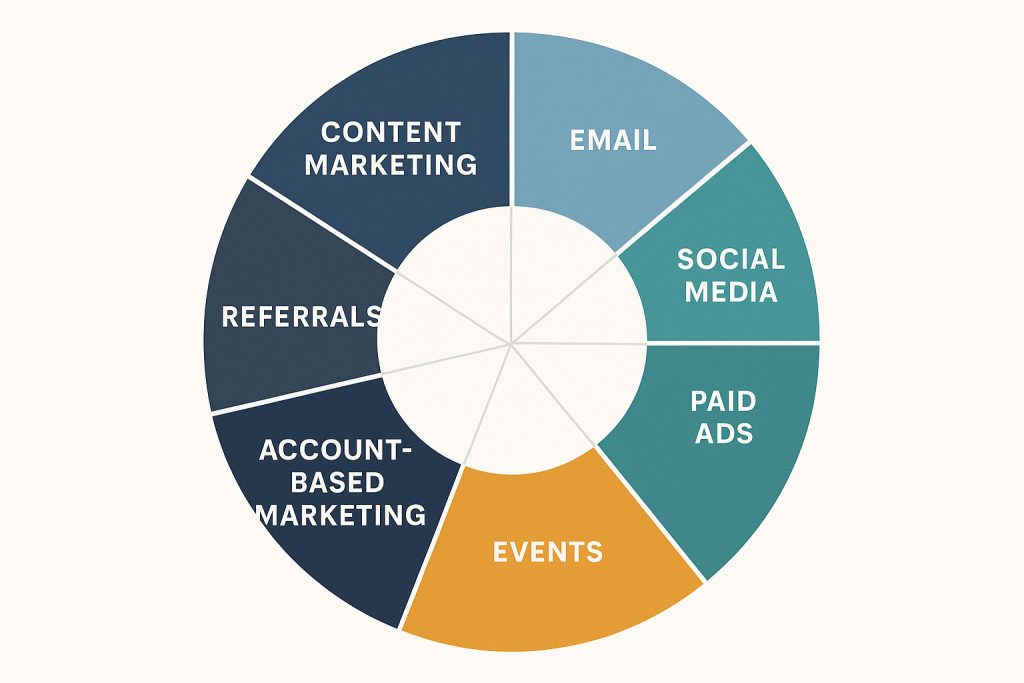
Not all marketing channels are created equal in the B2B marketing process. Some become growth engines while others drain budgets. The key is prioritizing based on your audience, budget, and goals.
Content marketing builds trust by answering prospect questions before sales calls. Account-based marketing (ABM) creates personalized experiences for high-value accounts, typically delivering higher win rates and customer lifetime value. Email marketing remains highly reliable when treated as conversation, not broadcast.
LinkedIn marketing connects you with B2B professionals where they spend time and seek solutions. Paid media accelerates results through targeted ads and retargeting. Webinars and events create deeper connections and position your team as experts. SEO captures demand when prospects actively research solutions.
For insights on implementing ABM effectively, check out our guide on account-based marketing explained.
Content That Converts
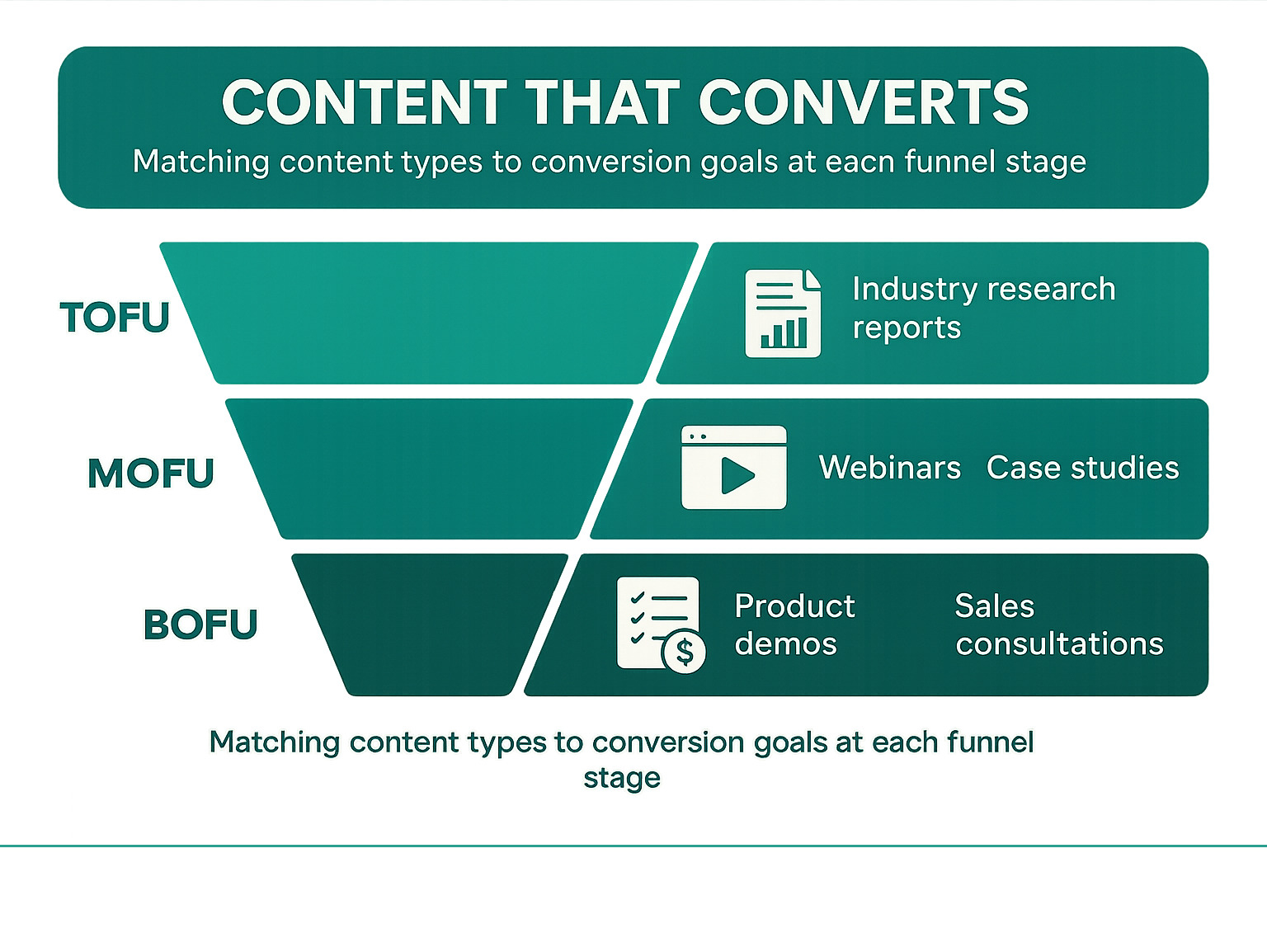
Content must match where prospects are in their journey. Top-of-funnel content includes industry research reports and educational blog posts that feel like helpful expert conversations. Middle-of-funnel content gets specific with case studies, solution comparisons, and ROI calculators. Bottom-of-funnel content addresses final purchase concerns through testimonials and implementation guides.
Thought leadership content builds credibility across all stages through industry speaking, original research, and trend insights.
Channel Prioritization Framework
Start with audience habits - where does your target audience spend time? Budget considerations matter - balance quick wins with long-term investments. Consider resource availability honestly - excellent execution on two channels often outperforms mediocre efforts across five.
Relationship & Trust Builders
Webinars build relationships at scale through valuable education without sales pitches. Communities create natural relationship-building opportunities. Peer referrals provide instant credibility when network contacts recommend you. Testimonials and case studies let customers do the selling, carrying more weight than any marketing message in risk-conscious B2B environments.
Technology, Alignment & Measurement
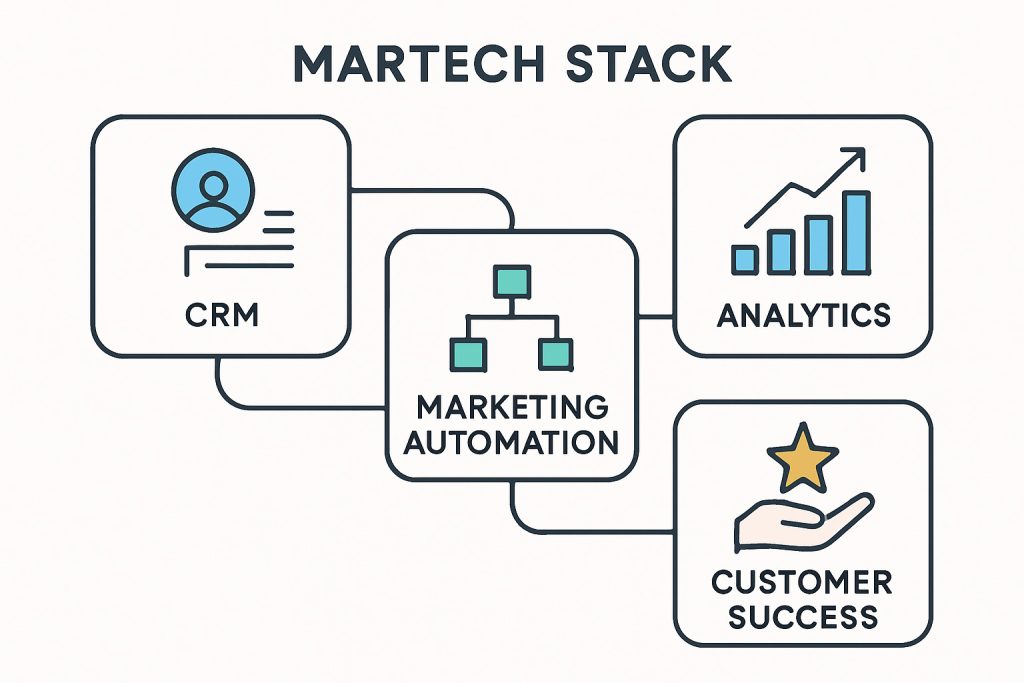
The modern B2B marketing process requires technology that works together, not creates headaches. Build a martech stack like a well-organized kitchen - the right tools in the right places.
Your CRM system sits at the heart of everything. When marketing, sales, and service teams use the same CRM, it eliminates "that's not what my system says" conversations. Marketing automation handles personalized communications and lead nurturing for B2B complexity. Your CMS creates first impressions while supporting SEO and personalization.
Customer Data Platforms (CDPs) unify information from multiple sources as first-party data grows more important. Analytics tools must handle messy B2B attribution across multiple touchpoints and long sales cycles.
The martech landscape evolves rapidly. For broader trend insights, check out this scientific research on martech landscape.
Marketing + Sales Alignment
Shared data and systems eliminate classic "your leads are terrible" versus "you never follow up" arguments. Service Level Agreements (SLAs) set clear expectations - marketing commits to qualified leads, sales commits to proper follow-up.
Pipeline reviews with both teams reveal bottlenecks neither would spot alone. Ride-alongs and joint training create mutual understanding when marketing joins sales calls and sales participates in planning.
Data-Driven Optimization
Customer Acquisition Cost (CAC) reveals the real cost of growth across channels. Customer Lifetime Value (CLV) provides the other half of the equation, showing long-term customer value. Win rate analysis at each funnel stage reveals where prospects get stuck.
Retention metrics ensure you're keeping customers happy, not just acquiring them. Predictive analytics uses historical data to forecast outcomes and identify at-risk accounts before they churn.
Governance & Compliance
GDPR and privacy compliance requires proper consent management, especially for international B2B marketing. First-party data strategy becomes critical as third-party cookies disappear. Security measures matter more in B2B as enterprise buyers evaluate your security standards during vendor selection.
Trends & Innovations Shaping 2025
The B2B marketing process is evolving rapidly, but most trends improve fundamentals rather than replace them.
AI content remix helps create better content faster - think smart research assistant for headlines and email optimization. Agentic AI analyzes campaign performance and makes optimization recommendations, some executing changes automatically.
Visual-first storytelling addresses B2B buyer overwhelm with text-heavy content. Niche influencers - respected industry experts with smaller but engaged audiences - provide real credibility with target buyers. Brand values and sustainability are becoming essential as B2B buyers want to work with aligned companies.
Personalization at Scale
First-party data from every website, email, and content interaction enables intelligent personalization. Dynamic content shows different messages based on visitor profiles - enterprise case studies for Fortune 500 visitors, rapid deployment content for startups. Intent signals detect when someone actively researches solutions, enabling perfectly timed outreach.
The Rise of Gen Z Decision-Makers
Gen Z professionals are starting to influence B2B purchasing decisions with different expectations. Social platforms matter more, including business content consumption beyond LinkedIn. Value alignment is crucial - they want to know what your company stands for. Mobile-centric experiences aren't optional anymore.
Hybrid Experiences & ABM 2.0
Virtual events have evolved beyond basic webinars to include networking and interactive workshops. Direct mail resurgence works precisely because everyone else went digital - thoughtfully designed packages at the right buying moment can be incredibly effective. Immersive demos let prospects explore solutions at their own pace, with some experimenting with virtual reality for complex products.
The common thread? Creating more relevant, timely, and engaging experiences for B2B buyers demanding consumer-grade experiences in professional settings.
Frequently Asked Questions about the B2B Marketing Process
Let's tackle the questions we hear most often about implementing a successful B2B marketing process. These come straight from conversations with marketing teams who are trying to make sense of the complexity.
How long does a typical B2B marketing process take from first touch to closed-won?
Here's the reality that might surprise you: most B2B sales take at least four months to close, with many falling into the 4-8 month range. But here's the kicker - that timeline can stretch dramatically based on what you're selling and who you're selling to.
Enterprise software deals? You're looking at 12-18 months easily. Smaller business services might wrap up in 2-3 months. The complexity of your solution and the size of the buying committee make all the difference.
What really matters is understanding that B2B buyers are well into their decision process before they even talk to sales. This means your marketing needs to do the heavy lifting during those early months, nurturing prospects through research, evaluation, and internal discussions before they're ready for sales conversations.
The good news? A well-structured B2B marketing process can actually accelerate these timelines by providing the right information at the right moments, helping buyers move through their journey more efficiently.
Which metrics matter most at each stage of the B2B marketing process?
This is where many teams get overwhelmed - there are so many numbers to track! The key is matching your metrics to what actually matters at each stage.
During the research and strategy phases, focus on foundational metrics like market size validation, customer feedback scores, and goal alignment indicators. You're building the foundation, so measure how solid it is.
When you're in planning and execution mode, shift to activity metrics: content production rates, campaign launch readiness, website traffic, and email engagement. These tell you if your engine is running smoothly.
The measurement and optimization stage is where business impact metrics take center stage: conversion rates, pipeline velocity, and customer acquisition cost. These connect your marketing activities to actual revenue.
For retention and expansion, customer satisfaction scores, expansion revenue, and referral rates become your north stars.
But if you had to pick just three metrics to rule them all? Pipeline influence, customer acquisition cost, and customer lifetime value. These directly tie your marketing efforts to business outcomes that executives care about.
How can small teams implement account-based tactics without enterprise budgets?
We get this question a lot, and the answer might surprise you: start smaller and get scrappier.
Instead of trying to target hundreds of accounts like the big players, focus on 10-20 high-value prospects that you can research thoroughly and engage personally. This concentrated approach actually works better for small teams because you can be more thoughtful and personal.
Leverage free tools like LinkedIn Sales Navigator, Google Alerts, and good old-fashioned company website research instead of expensive intent data platforms. You'd be amazed how much intelligence you can gather without spending a fortune.
Personalize your existing content rather than creating everything from scratch. Take that case study and adapt it to speak to a specific prospect's industry challenges. Modify your webinar slides to address a particular account's pain points.
Focus on relationship building through industry events, social media engagement, and genuine networking. These activities cost time instead of money, and they often produce better results than expensive advertising campaigns.
The secret sauce? Start with what you can measure and scale gradually. Track what works with your initial accounts, prove the ROI, then expand your ABM efforts as you build confidence and budget.
Some of the most successful account-based campaigns we've seen came from small teams who got creative with limited resources. Constraints often breed the most innovative solutions.
Conclusion
The B2B marketing process isn't just a collection of tactics you throw at the wall to see what sticks. It's relationship architecture - a systematic approach to building trust, demonstrating value, and creating sustainable growth that actually lasts.
Here's what we've learned: B2B marketing success comes down to treating people like humans, not lead scores. Yes, you need the right technology and processes. But at the end of the day, you're dealing with real people who have real problems they need to solve.
The companies that win in the long term understand this isn't about viral moments or growth hacks. It's about showing up consistently, providing genuine value, and building relationships that matter. When you focus on relationship architecture rather than quick wins, everything else falls into place.
Results come from systems, not heroics. The six-stage process we've outlined—research, strategy, planning, execution, measurement, and retention—gives you that system. However, remember that it's not a set-it-and-forget-it solution. Markets change, buyers evolve, and what worked last year might not work next year.
That's why continuous improvement matters so much. The best B2B marketers are always testing, always learning, always adjusting. They measure what actually moves the needle and optimize based on data, not opinions or gut feelings.
Most importantly, never lose sight of the human element. Technology can automate tasks and scale personalization, but it can't replace genuine expertise and responsive support. People still buy from people they trust.
Human-Centered Approach
At The B2B Mix, this human-centered approach is exactly what sets us apart. We help companies optimize HubSpot, streamline marketing operations, and execute digital strategies without the jargon or complexity that makes your head spin. Our hands-on expertise focuses on what actually works, not what sounds impressive in boardroom presentations.
Whether you're just starting to formalize your B2B marketing process or looking to optimize what you've already built, the key is taking that first step. Start with solid research, set clear goals that everyone understands, and execute consistently. The results will follow.
Ready to streamline your B2B marketing operations without the headaches? Learn more about our B2B digital marketing services and find how we can help you implement these strategies with real, responsive human support every step of the way.