
The Reality of B2B Demand Generation
Hey there! Let's talk about what B2B demand generation really means in today's complex business landscape.
B2B demand generation isn't just another marketing buzzword—it's a comprehensive approach that nurtures potential customers throughout their entire journey with your brand. Unlike traditional lead generation that focuses on capturing contact information as quickly as possible, demand generation is about building genuine relationships with prospects long before they're ready to make a purchase decision.
"The best way for practitioners to demonstrate their solution's value is through content, which 81% of buyers said had a significant impact on their buying decisions." — 2023 B2B Buyers Survey
True B2B demand generation aligns your sales and marketing teams around quality rather than quantity. It's not about filling your pipeline with just any leads—it's about creating meaningful connections with the right prospects who will eventually convert at higher rates because they already know, like, and trust your brand.
After almost 15 years developing demand generation strategies for technology and SaaS companies, I've seen how the right approach transforms marketing from a cost center to a revenue driver. No magic tricks or overnight miracles—just strategic, consistent efforts that build momentum over time.
What Is B2B Demand Generation?
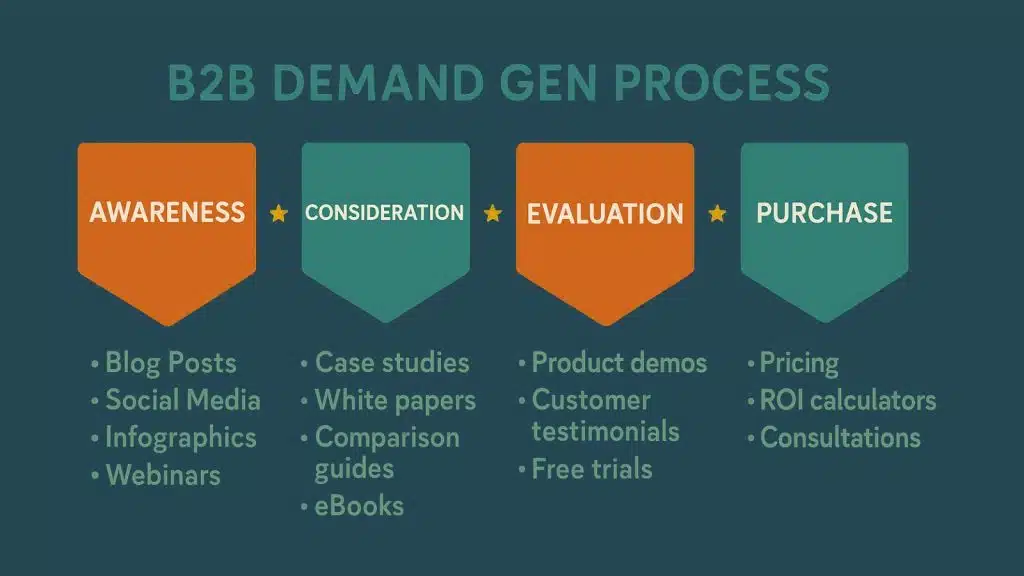
B2B demand generation is a long-term, ongoing marketing strategy designed to create awareness and interest in your products or services among your target audience. It's a comprehensive approach that spans the entire buyer's journey—from initial awareness through consideration, decision-making, and even post-purchase advocacy.
The 95/5 rule, researched by LinkedIn B2B Institute, reveals a fundamental truth about B2B marketing: at any given time, only 5% of your potential customers are actively looking to buy. The other 95% aren't in-market yet.
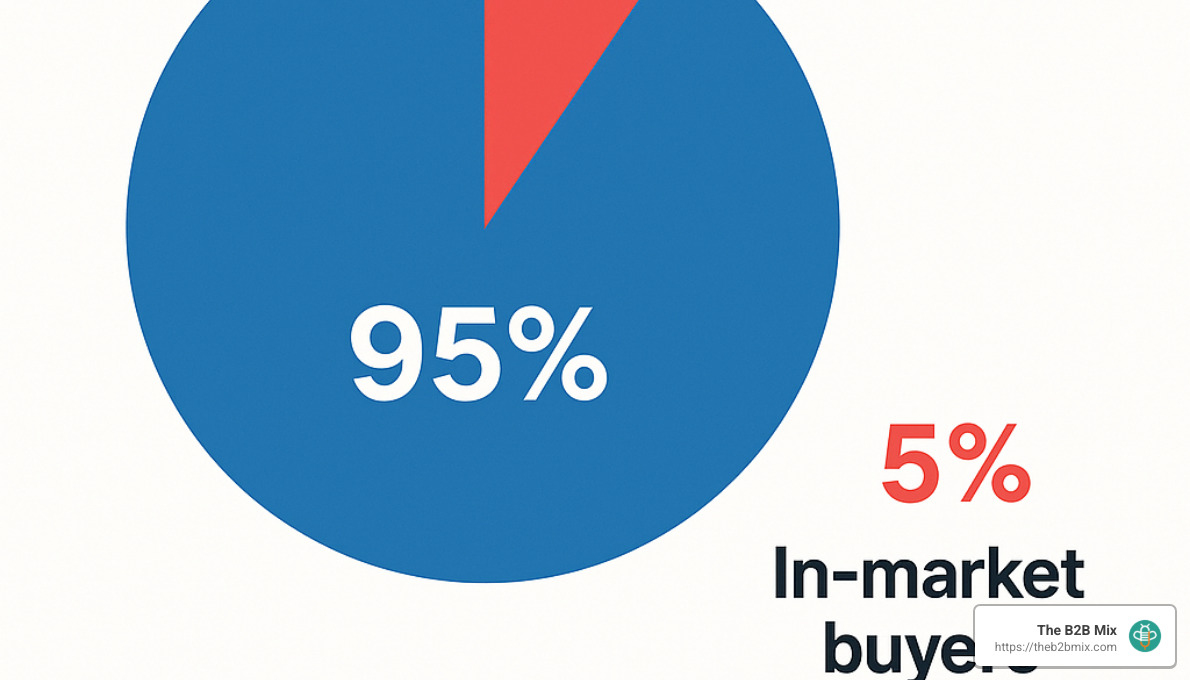
This insight completely changes how we should approach marketing. When we focus only on that 5% with traditional lead generation tactics, we're essentially ignoring the vast majority of our future customers. B2B demand generation addresses this gap by building relationships with prospects long before they're ready to purchase.
Think of it like planting seeds that will grow over time. As Morgan Housel points out about Warren Buffett's success: "Aside from the investing acumen, the real key to Buffett's success is that he's been a fantastic investor for three-quarters of the century! That's the best example of time, consistency, and compounding interest in action."
The same principle applies to demand generation—it's about consistent, valuable engagement over time that compounds into trust and eventually, revenue. By nurturing relationships with that 95%, you're ensuring they think of you first when they finally enter the market.
B2B demand generation vs lead generation
Many marketers confuse demand generation with lead generation, but they serve different purposes:
| Demand Generation | Lead Generation |
|---|---|
| Creates interest and awareness | Captures contact information |
| Educates with no immediate expectation | Requires form fills or direct contact |
| Uses primarily ungated content | Relies heavily on gated content |
| Targets the full funnel (95% + 5%) | Focuses mainly on the 5% ready to buy |
| Builds long-term relationships | Seeks immediate conversion opportunities |
| Measured by engagement, brand awareness, and pipeline quality | Measured by number of leads, MQLs, form submissions |
I've seen this tension play out in countless organizations. As Fran Langham from Cognism noted during their shift from lead gen to demand gen: "The biggest issue for the marketing team was getting the buy-in from sales. There was a lack of patience."
This highlights one of the key challenges—demand generation requires patience and alignment between marketing and sales teams. While lead generation might deliver more MQLs (Marketing Qualified Leads), B2B demand generation delivers more SQLs (Sales Qualified Leads) that convert at higher rates because they're already familiar with your brand and solutions.
B2B demand generation vs demand capture
Another important distinction that often gets overlooked is between demand generation and demand capture:
When you're generating demand, you're creating interest and awareness where none existed before. You're educating prospects about problems they may not know they have through thought leadership, content marketing, and brand building. This targets the 95% not actively looking to buy.
On the flip side, demand capture intercepts existing demand from prospects already searching for solutions. It leverages intent signals and buying behaviors through SEO, paid search, and bottom-of-funnel content, targeting the 5% actively looking to buy.
Both are necessary components of a complete B2B demand generation strategy. As one marketing leader put it: "Leads are the consequence of brand awareness, demand generation, word of mouth, customer advocacy, and a great product."
The most successful B2B companies don't choose between these approaches—they integrate them into a cohesive strategy that nurtures relationships with future buyers while capturing those ready to purchase today. This balanced approach acknowledges the reality of the 95/5 rule while still delivering the short-term results that keep the business growing.
The Full-Funnel Framework: Awareness to Conversion
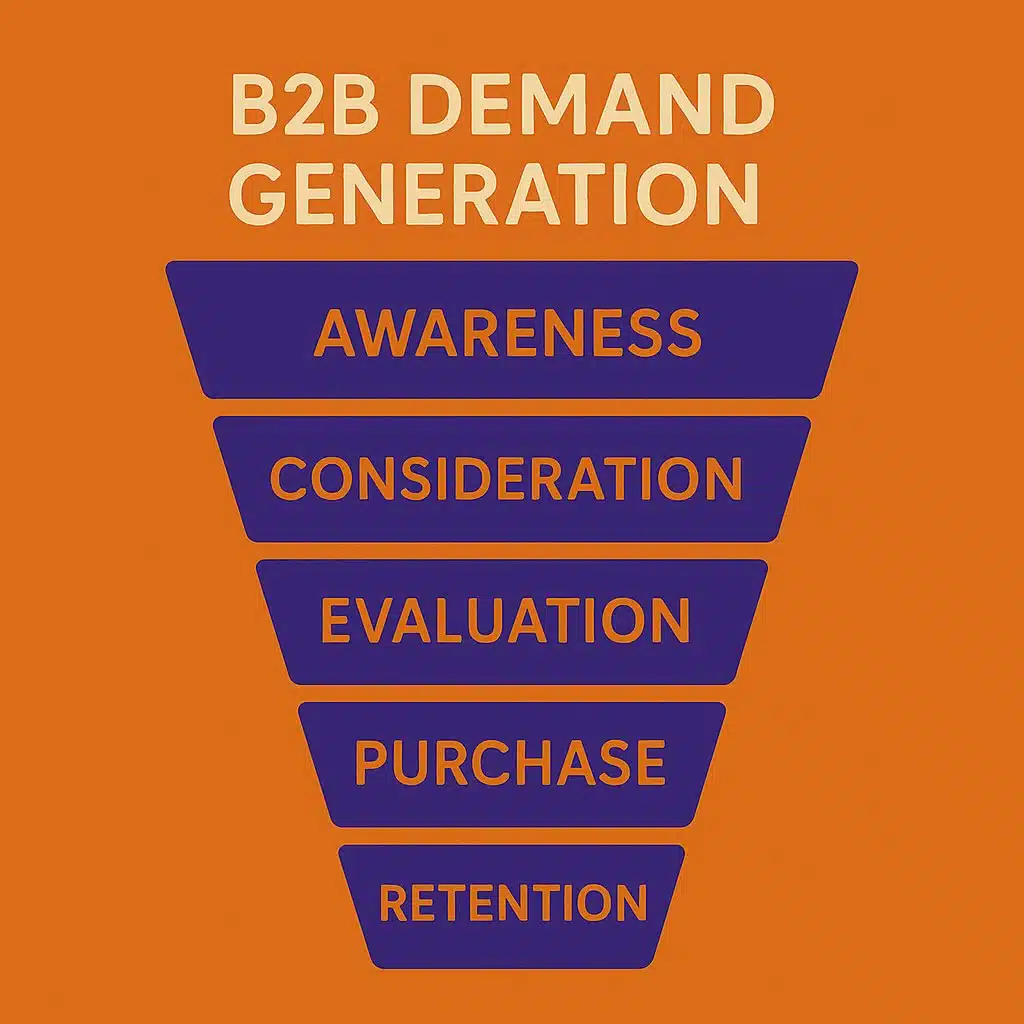
Ever watched a B2B buying decision unfold? Unlike those impulse purchases we make as consumers, B2B decisions take time, involve multiple people, and follow a much more deliberate path. That's why effective B2B demand generation needs a structured approach that meets buyers where they are in their journey.
Think of your demand generation like a waterfall, with each stage flowing naturally into the next:
First, you create awareness, introducing your brand and thought leadership to folks who might not know you exist. Then you nurture consideration by educating prospects about industry challenges they face. As they show intent, you demonstrate how your specific solution addresses their needs. Only then do you facilitate conversion into a customer. But it doesn't end there—retention and turning customers into advocates completes the cycle.
This isn't just marketing theory—it's how real B2B purchases happen. In fact, one study found that 62% of B2B customers respond to salespeople who connect by sharing relevant content and insights. But you can't be relevant if you don't know who you're talking to.
That's why understanding your Ideal Customer Profile (ICP) and developing detailed buyer personas isn't optional—it's the foundation everything else builds upon. Without this clarity, your demand generation efforts will feel generic and forgettable.
Mapping stages to content & touchpoints
Here's where the rubber meets the road. Each stage of your buyer's journey needs different types of content and engagement approaches.
When someone's just becoming aware of you, thought leadership articles, social media engagement, and podcast appearances work wonders. Keep these resources ungated—remember, you're building awareness, not barriers.
As they move into consideration, they'll appreciate more substantial resources like webinars, detailed guides, and expert interviews. This is where your email nurture sequences really shine, delivering progressive value as interest grows.
When prospects show intent, they're ready for case studies, product demonstrations, and ROI calculators. This is also where personalization (especially in Account-Based Marketing programs) becomes incredibly powerful.
At the conversion stage, customer testimonials, implementation guides, and consultation calls help push them over the finish line. And once they're customers, education resources, product updates, and user communities keep them engaged and successful.
One of our most successful clients created what we call a "buyer enablement hub"—essentially a dedicated content collection organized by buying stage and persona. It guides prospects through their journey at their own pace while simultaneously helping the marketing team identify accounts showing high engagement. It's the perfect blend of education and intent-gathering.
Creating content for each stage might sound overwhelming, but remember—you don't need to build everything at once. Start with understanding your buyer's journey, then gradually develop content that addresses their most pressing questions at each stage. Over time, you'll build a comprehensive resource that works around the clock to generate demand.
Want to learn more about organizing your content operations for maximum impact? Check out our content operations framework guide for practical next steps.
Tactics & Channels That Drive Demand
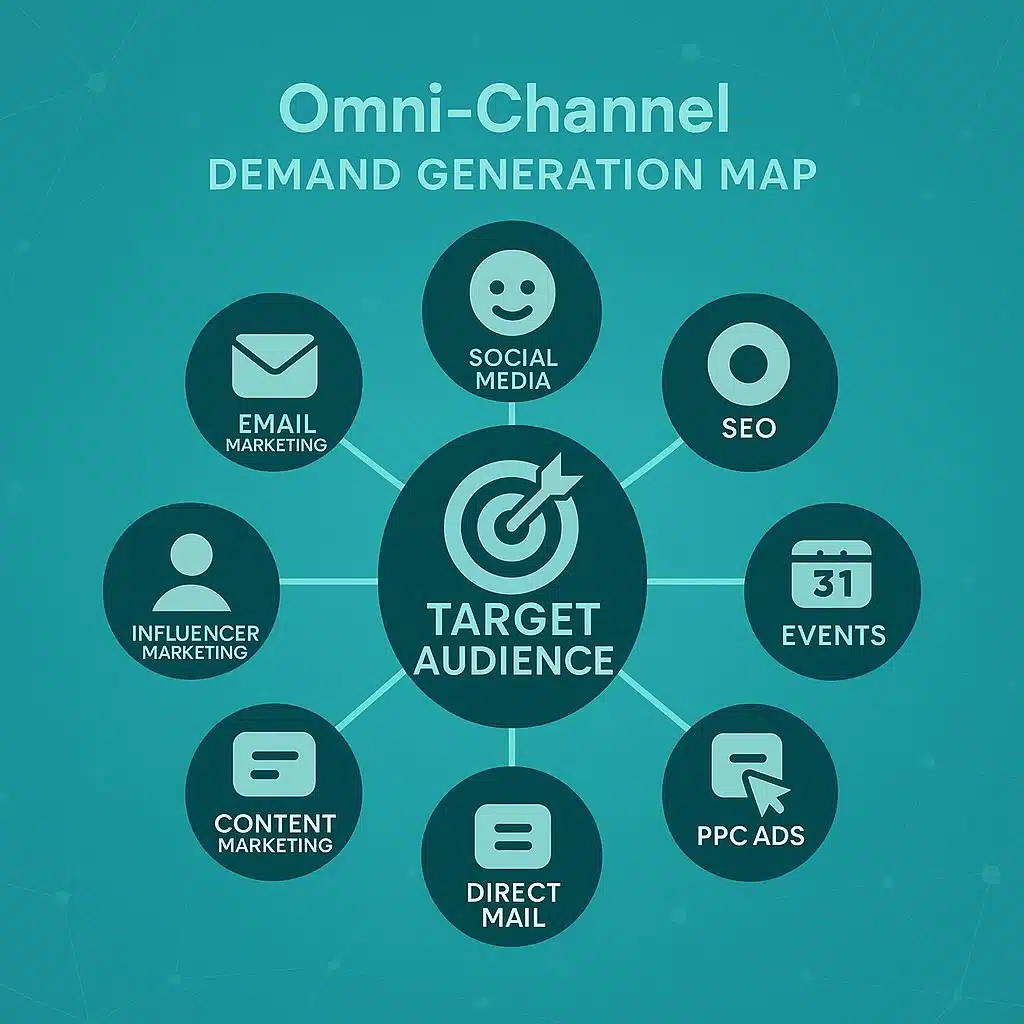
Successful B2B demand generation requires an omnichannel approach that meets your audience where they are. No single tactic or channel will deliver comprehensive results—it's the orchestrated combination that creates real impact.
Think of demand generation like cooking a great meal—you need multiple ingredients working together to create something special. Let's explore the most effective ingredients in your B2B demand generation recipe:
Content marketing powerhouse
Content remains the foundation of effective demand generation. According to the 2023 B2B Buyers Survey, a whopping 81% of buyers said content significantly impacted their buying decisions. That's huge!
Your content strategy should include a healthy mix of formats. Blog posts establish your thought leadership while improving SEO. Videos bring complex concepts to life and showcase your personality. Podcasts create deeper connections through conversation—there's something powerful about hearing a human voice. Whitepapers and research reports provide meaty, in-depth value that positions you as an authority. Case studies show real-world results, while infographics make complex information digestible at a glance.
The secret sauce? Creating content that genuinely educates rather than sells. As Tim Barker from DataSift wisely notes: "Customers are now smarter, more connected, more informed, more influenced and influential socially, and less likely to respond to campaign-bait. Marketing has to create content people actually want."
Creating amazing content is only 20% of success—the other 80% comes from thoughtful distribution and promotion. The best content in the world won't drive demand if nobody sees it!
Account-Based Marketing playbook
If you're targeting enterprise accounts with complex buying committees, Account-Based Marketing (ABM) might be your new best friend. The numbers speak volumes: companies using ABM have seen an 84% increase in reputation score and 74% improvement in customer relationships.
Think of ABM as fishing with a spear instead of a net. You're identifying specific high-value accounts that match your ideal customer profile, then creating personalized experiences just for them. This approach involves multi-threading (engaging multiple stakeholders within each account), coordinated outreach between marketing and sales, and often account-based advertising targeting specific companies.
What makes ABM particularly powerful is its laser focus. Rather than spreading your resources thin across hundreds of leads, you're concentrating on the accounts most likely to convert and deliver significant value. This approach works beautifully when combined with intent data to identify accounts already showing active interest in solutions like yours.
Want to learn more about implementing account-based strategies effectively? Check out our detailed guide on account-based content marketing strategies.
Events & webinars that convert
Despite all the digital change in marketing, events remain a cornerstone of effective B2B demand generation. They've simply evolved beyond physical gatherings to include virtual and hybrid formats that often reach even larger audiences.
One tech vendor's experience says it all: their webinar drove 140 registrations toward a goal of 500 net-new opportunities, with their VP of Marketing noting: "The webinar helped me fill my pipeline... and we've had some early-stage buying conversations."
Your event strategy might include webinars that demonstrate expertise, virtual conferences that gather industry thought leaders, demo centers showcasing your product, or executive roundtables focused on industry challenges. Physical events still matter too—roadshows in key markets and industry conferences provide invaluable face-to-face connections.
Here's a tip many companies miss: the magic happens in the follow-up. I've seen companies invest heavily in producing stunning events only to drop the ball on post-event nurturing. Don't let those warm connections cool off—have a solid plan to continue the conversation afterward.
Marketing automation & CRM glue
The technical foundation holding your B2B demand generation efforts together is the integration between your marketing automation and CRM systems. This tech stack enables personalized, scalable engagement throughout the buyer's journey.
With the right setup, you can implement lead scoring to prioritize your hottest prospects, create nurture workflows that automatically deliver relevant content based on behavior, and set up sales alerts that notify your team when someone shows high buying intent. You'll also gain valuable attribution tracking to understand which touchpoints influence conversions.
HubSpot is particularly valuable for demand generation because it brings these capabilities together in one platform, creating a seamless experience for both your team and your prospects. Many of our clients have said that implementing a tool like HubSpot has transformed the way they approach their overall marketing strategy and enhanced how they determine what leads they engage.
The best demand generation programs use automation not just for efficiency but for personalization—delivering the right message to the right person at exactly the right moment based on their behavior and profile. If you're looking to optimize your tech stack, check out our guide on why an integrated tech stack is key to your B2B success and learn about getting effective, efficient marketing automation.
Measurement, Optimization & Future Outlook
Effective B2B demand generation requires rigorous measurement and continuous optimization. Without clear metrics, it's impossible to determine what's working and where to invest.
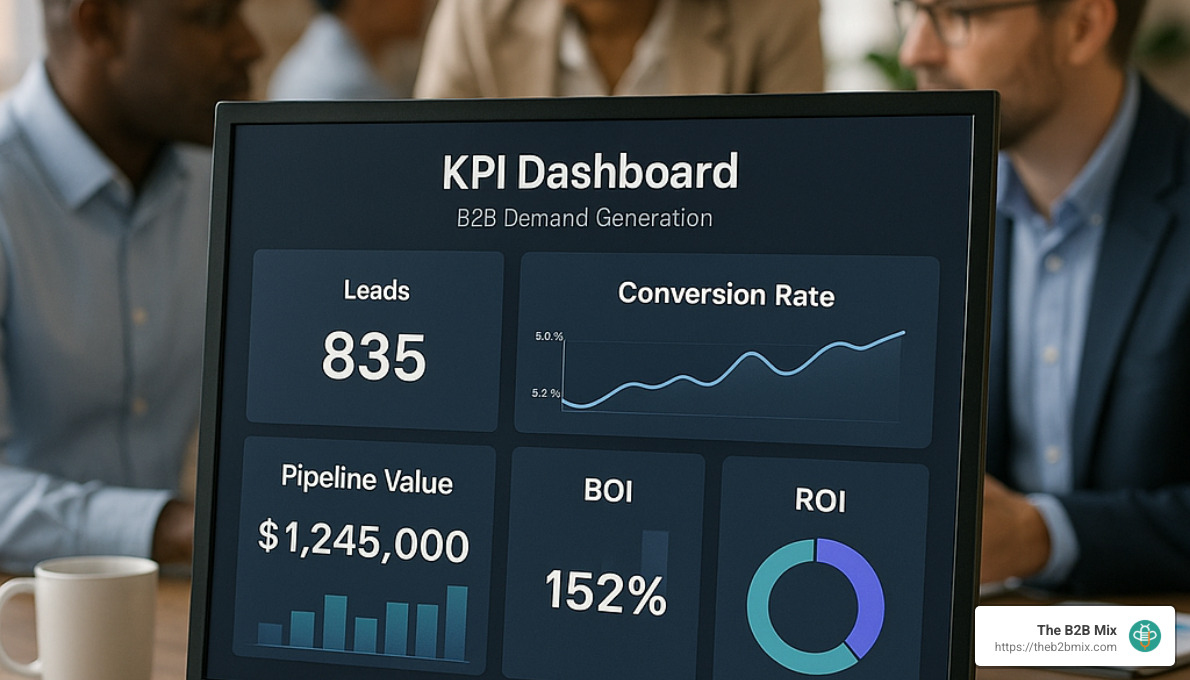
The tricky part? Demand generation impacts multiple stages of the funnel, so you need a diverse set of metrics to truly understand performance. Let's break down how to measure what matters.
Building a demand gen scorecard
I've found that the most effective demand generation teams develop a comprehensive scorecard that spans the entire funnel.
At the top of the funnel, you'll want to track brand awareness and recall, website traffic, and content engagement metrics. These tell you if you're successfully getting on people's radar.
Moving to mid-funnel, pay close attention to your MQL to SQL conversion rate – this is the canary in the coal mine for demand gen quality. When this number goes up, it means your marketing efforts are resonating with the right people. Also track account engagement scores and demo requests to understand how well you're nurturing interest.
Bottom-funnel metrics reveal the real business impact: win rate, sales cycle length, and marketing-sourced revenue. These connect your demand gen efforts directly to the bottom line.
Don't forget long-term value metrics like customer lifetime value (CLV) and your CAC:CLV ratio – these tell you if you're acquiring customers profitably.
One marketing director I worked with put it perfectly: "We stopped celebrating lead volume and started celebrating lead quality. When our MQL-to-SQL rate increased from 12% to 27%, we knew our demand generation strategy was working."
Common pitfalls & how to avoid them
Even the best-intentioned demand generation programs hit roadblocks. Here are the pitfalls I see most often:
Misaligned ICP is probably the biggest culprit. When you target too broadly, you dilute your message and waste resources. Instead, narrow your focus to the accounts most likely to convert and deliver value.
Many teams fall into the trap of overusing gated content. While it's tempting to capture contact info at every opportunity, this creates friction and reduces reach. Save form fills for high-value, late-stage content, and use ungated content to build awareness.
Sales-marketing misalignment continues to plague organizations of all sizes. When these teams work in silos, the customer experience suffers. Create shared goals, regular check-ins, and joint planning sessions to keep everyone rowing in the same direction.
I've also seen many teams get seduced by vanity metrics like page views or raw lead counts. These numbers might look impressive in reports, but often have little correlation with actual business outcomes. Focus instead on engagement quality and pipeline impact.
Perhaps the most insidious pitfall is short-term thinking. Demand generation is a marathon, not a sprint. Set appropriate expectations with leadership and measure both immediate and long-term impact.
The goal isn't just to attract leads—it's finding prospects with the highest conversion potential and focusing efforts there.
The future of demand gen
The B2B demand generation landscape continues to evolve at a breathtaking pace. Here's what I'm seeing on the horizon:
AI-powered personalization is changing how we engage prospects. We're moving beyond basic "Hello {First Name}" to sophisticated content recommendations and predictive engagement scoring that feels genuinely helpful rather than creepy.
With third-party cookies disappearing, first-party data is becoming marketing gold. Companies that build direct relationships with their audiences and collect their own data will have a significant advantage.
Community-driven demand is proving incredibly powerful. When you build an engaged community around your brand, you create sustainable, organic demand through peer influence. This approach takes time but delivers compounding returns.
We're also seeing sustainability messaging become increasingly important in B2B decisions. Environmental and social impact considerations are no longer nice-to-haves but essential elements of many procurement processes.
The lines between marketing and sales continue to blur, with sales enablement integration becoming a critical part of demand generation. The most successful teams create seamless handoffs and consistent messaging across the entire customer journey.
Looking for more insights on how to optimize your marketing automation for the future? Check out our guide on getting effective, efficient marketing automation.
As one forward-thinking CMO put it: "The future belongs to brands that build direct relationships with their audiences, own their data, and create value before they extract it."
That's a future worth building toward – one meaningful connection at a time.
Frequently Asked Questions about B2B Demand Generation
Why is my current lead-gen program hurting sales?
If you're wondering why your sales team seems frustrated with marketing's leads, you're not alone. Many B2B organizations struggle with the frustration of not understanding why B2B digital marketing ideas and lead generation efforts aren't translating to revenue.
Traditional lead generation often undermines sales effectiveness in several important ways. When you focus solely on capturing contact information, you're likely pushing prospects into sales conversations before they're ready to have them. This creates a disconnect that frustrates everyone involved.
Your brand perception can take a hit, too. Those aggressive tactics that generate form fills might be creating negative impressions that last long after that initial touchpoint.
This disconnect often creates unrealistic expectations about conversion rates. When marketing celebrates volume metrics while sales struggles with quality, tension naturally builds between teams. The result? Sales morale suffers as reps waste precious time on prospects who aren't ready to engage.
The solution isn't complicated, though it does require patience. Shifting to a B2B demand generation approach means educating and nurturing prospects before transitioning them to sales. This ensures they're genuinely interested and qualified when that sales conversation finally happens.
How long does a B2B demand generation engine take to show ROI?
Clients often ask, "How long will it take for this type of strategy to pay off?"
It's a fair question. While B2B demand generation is indeed a long-term strategy, you'll see encouraging signals much sooner than you might think. The key is knowing what to look for at each stage:
In the first 1-3 months, you'll notice improved engagement metrics – more people reading your content, opening your emails, and engaging with your social posts. These are early indicators that your message is resonating.
By months 3-6, you should see increased website traffic, more demo requests, and the beginning of pipeline influence. Your sales team might start mentioning that prospects seem more knowledgeable about your offerings before their first conversation.
Between 6 and 12 months is when things get exciting. You'll measure the real impact on sales opportunities, notice shorter sales cycles, and calculate your initial ROI. This is when most executives start becoming true believers in the approach.
After a year, the compounding effect really kicks in.
The secret is setting appropriate expectations and tracking those leading indicators before the lagging ones materialize. Patience pays off – literally.
Which metric matters most to prove success?
With so many possible metrics to track, it's easy to get overwhelmed. While different stakeholders care about different numbers, I've found that the most compelling metric for most organizations is the ratio of marketing-influenced pipeline to marketing spend. This directly shows how your demand generation efforts contribute to revenue opportunities.
Beyond this north star metric, you'll want to keep an eye on several others:
Your MQL-to-SQL conversion rate speaks volumes about lead quality. When this number rises, marketing is sending better-qualified prospects to sales, which is a win for everyone.
Sales cycle length helps you understand how your demand generation efforts accelerate buying decisions. Well-educated prospects typically move through the funnel faster.
Your win rate reflects how demand generation improves close probability. When prospects trust your brand before the sales conversation begins, they're more likely to choose you over competitors.
Average contract value shows how demand generation influences deal size. Informed buyers often purchase more comprehensive solutions.
Finally, customer acquisition cost helps you measure the efficiency of your demand generation engine over time.
The single most important metric to track is your SQL conversion rate. When the SQL conversion rate improves, everything downstream improves: pipeline, revenue, and, ultimately, ROI.
The ideal approach is to create a balanced scorecard with both leading indicators (those early engagement metrics) and lagging indicators (the revenue metrics that follow). This gives you both the early confidence signals and the long-term proof points you need to sustain your B2B demand generation efforts.
Conclusion
Building an effective B2B demand generation engine isn't about magical tactics or overnight success—it's about creating a thoughtful, strategic approach that connects with your audience at every stage of their journey.
When you accept the reality that 95% of your potential customers aren't ready to buy right now, everything changes. You stop chasing quick wins and start building relationships that compound over time, creating a sustainable pipeline of high-quality opportunities.
Throughout this guide, we've explored how B2B demand generation differs from traditional lead generation, the importance of a full-funnel approach, and the tactics that actually drive results. Let's bring it all together with what truly matters:
Focus on creating value before extracting it. When you educate and inform your audience without immediately asking for something in return, you build trust that translates into stronger relationships and higher conversion rates down the line.
Balance your efforts across the entire funnel. From thought leadership content that builds awareness to detailed case studies that help prospects evaluate your solution, each piece plays a crucial role in moving potential customers toward a decision.
Align sales and marketing around shared goals. When both teams understand that quality trumps quantity and collaborate on defining what makes a qualified opportunity, magic happens—shorter sales cycles, higher win rates, and better customer relationships.
Measure what truly matters. Move beyond vanity metrics like page views or raw lead counts and focus on indicators that connect to revenue—MQL-to-SQL conversion rates, pipeline velocity, and marketing-influenced opportunities.
At The B2B Mix, we've seen how these principles transform marketing from a cost center to a revenue driver. Our team specializes in helping B2B companies optimize their HubSpot implementation, streamline marketing operations, and execute digital strategies that deliver real results, without the jargon or complexity.
We understand that knowing what to do is only half the battle—you need a partner who can help you actually implement these strategies in a way that works for your specific business. Whether you're just starting to build your demand generation engine or looking to optimize an existing program, our hands-on approach ensures you get the support you need.
Ready to transform your B2B demand generation approach? Learn more about our B2B digital marketing services or reach out today to discuss how we can help you build a demand generation program that drives sustainable growth. We're real humans, ready to help you steer the complexities of modern B2B marketing with clarity and confidence.