

Why Smart B2B Teams Are Ditching the Marketing Funnel
When searching for an account based marketing definition, here's what you need to know:
Account-Based Marketing (ABM) is a strategic B2B marketing approach that treats individual high-value accounts as "markets of one." Instead of casting a wide net to generate leads, ABM focuses resources on a select list of target accounts with personalized campaigns designed to engage entire buying committees.
Key characteristics:
- Quality over quantity - targets fewer, higher-value accounts
- Personalized engagement - custom messaging for each account
- Sales-marketing alignment - teams work together on shared goals
- Account-level focus - measures success by account progress, not individual leads
Think of it like this: traditional marketing is fishing with a net, hoping to catch lots of fish. ABM is spearfishing - you pick your target, aim carefully, and go after the biggest catch.
This approach flips the traditional marketing funnel upside down. Instead of starting broad and narrowing down, you start with your ideal accounts and expand your reach within them. It's a fundamental shift from generating leads to generating revenue from specific accounts.
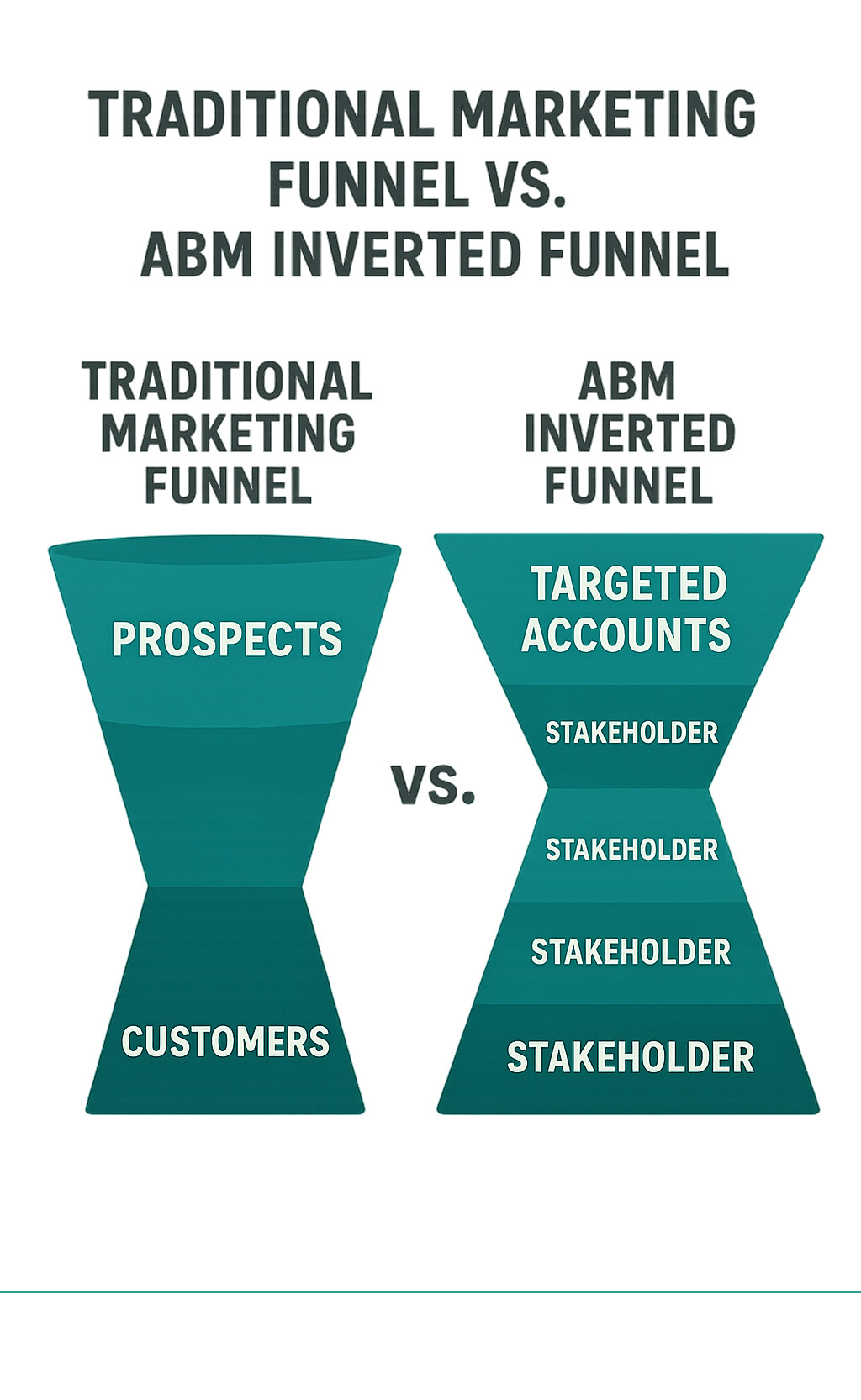
Handy account-based marketing definition terms:
So, What is Account-Based Marketing? (The Real Definition)
Let's cut through the marketing buzzwords and get to what really matters. When we talk about the account based marketing definition, we're describing something beautifully simple: treating each target account like its own little market.
Think about it this way. Instead of creating one campaign and blasting it to thousands of prospects (and hoping someone bites), you create highly personalized campaigns for a carefully chosen group of high-value accounts. Each account gets the VIP treatment.
This is a completely different beast from traditional lead generation. Traditional marketing is like standing on a busy street corner with a megaphone, shouting your message to anyone who'll listen. ABM is more like having a one-on-one conversation with someone you've been wanting to meet for months.
The magic happens when you focus on value over volume. Instead of chasing 1,000 leads that might convert at 2%, you focus on 50 accounts that could convert at 20% with much higher deal values. It's the difference between working harder and working smarter.
Here's what makes ABM so powerful: it recognizes that B2B buying decisions aren't made by lone wolves. They're made by committees of 6-10 people on average. ABM accepts this reality by targeting the entire buying committee within each account, not just individual leads.
| Traditional Marketing | Account-Based Marketing |
|---|---|
| Focus: Individuals | Focus: Accounts |
| Goal: Lead Volume | Goal: Account Revenue |
| Communication: Broad | Communication: Personalized |
| Key Metrics: MQLs/CPL | Key Metrics: Account Engagement/Pipeline Velocity |
The real beauty of ABM is its precision. You're not crossing your fingers and hoping the right person sees your generic message. You're delivering the right message to the right person at the right account at the right time. It's marketing with a sniper rifle instead of a shotgun.
This approach treats individual accounts as a "market of one," recognizing that each account has unique challenges, goals, and decision-making processes that deserve customized attention.
For more insights on how ABM fits into your broader strategy, check out our guide on account-based marketing explained and find what your B2B marketing strategy may be missing.
Why Bother with ABM? The Big Benefits

Here's the thing about account based marketing definition - it sounds great in theory, but let's be real. ABM requires more upfront work than traditional marketing. You're probably wondering if it's worth the extra effort.
The short answer? Absolutely. The benefits are compelling enough that smart B2B companies are making the switch in droves. Let's explore why ABM is creating such a buzz.
Tighter Sales & Marketing Alignment
If you've worked in B2B marketing for more than five minutes, you've probably witnessed the classic sales-marketing standoff. Marketing generates leads, sales complains they're garbage, and everyone points fingers when deals don't close. Sound familiar?
ABM completely changes this dynamic. When both teams focus on the same specific accounts, something magical happens - they actually start working together. Instead of marketing throwing leads over the wall and hoping for the best, both teams collaborate on winning the same 50 target accounts.
When teams work together, they share insights more freely. Marketing learns which accounts are actually ready to buy, while sales provides feedback on what messaging resonates with prospects. It creates a virtuous cycle where everyone gets better at their job.
A Seriously Impressive ROI
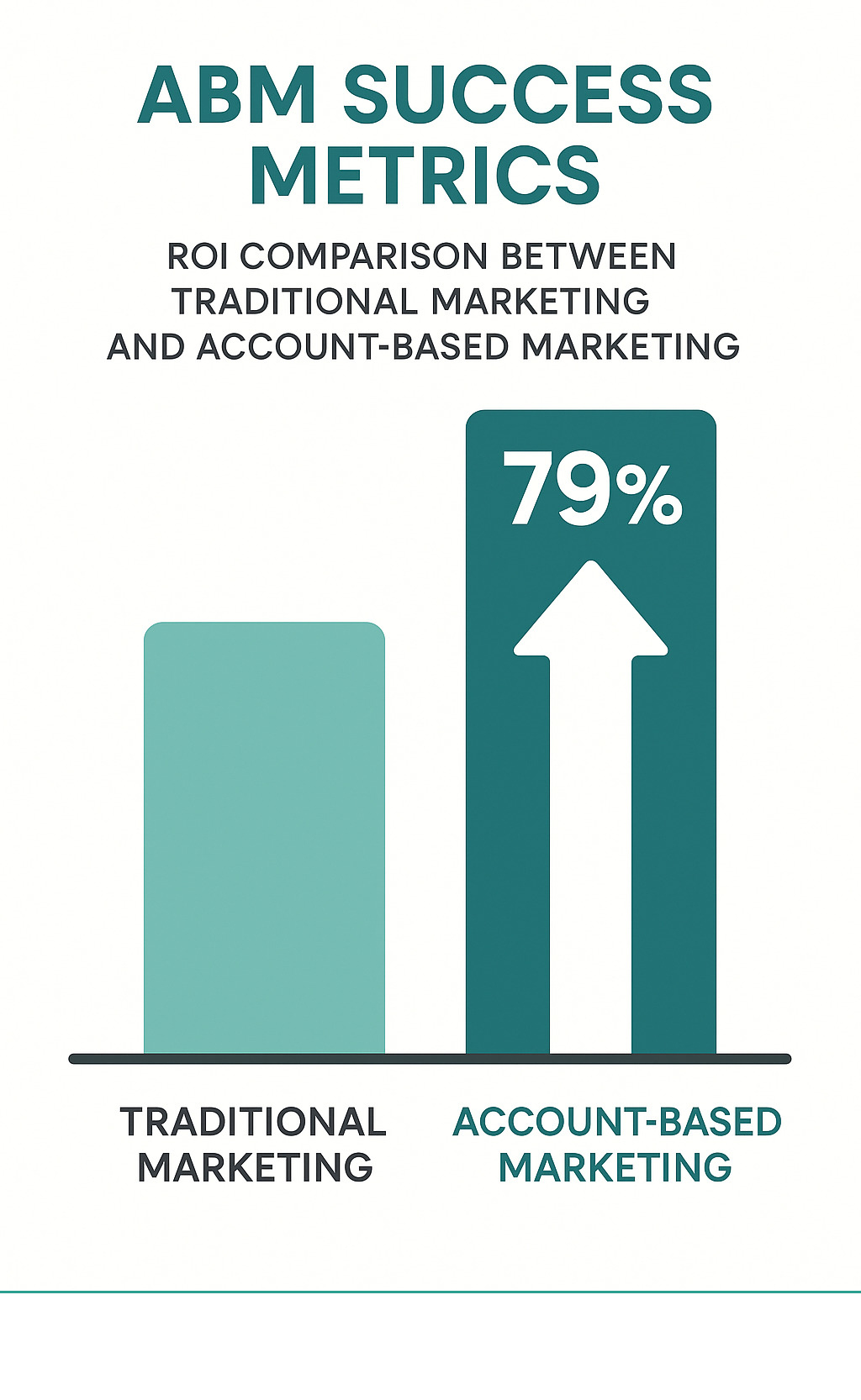
Now we're talking about the stuff that makes CFOs smile. Because ABM focuses your resources on accounts most likely to buy, you see better returns on every marketing dollar spent.
Why does ABM deliver such strong ROI? It comes down to focused spending - instead of spreading your budget across thousands of prospects, you concentrate it on high-value accounts. You also typically see larger deal sizes since ABM targets enterprise accounts with bigger budgets.
The shorter sales cycles don't hurt either. When you deliver personalized engagement that speaks directly to an account's specific needs, deals move forward faster. Plus, you get higher close rates because you're not pitching generic solutions to specific problems.
A More Personal and Consistent Customer Experience
Today's B2B buyers have high expectations. B2B executives want to feel like you understand their specific challenges, not like they're just another lead in your database.
ABM delivers on this expectation by moving away from generic messaging to content that addresses specific account needs and pain points. Instead of hoping your one-size-fits-all email resonates with everyone, you're crafting messages that speak directly to each account's unique situation.
This personalization builds trust and credibility fast. When a prospect sees content that directly addresses their company's challenges, they're more likely to engage. It shows you've done your homework and understand their business.
The consistency across all touchpoints matters too. Whether they're seeing your LinkedIn ad, reading your email, or talking to your sales rep, the message stays relevant and cohesive. This creates a seamless experience that builds confidence in your solution.
For more insights on building effective strategies that incorporate this level of personalization, check out our guide on what your B2B marketing strategy may be missing.
Your Step-by-Step Guide to Launching an ABM Strategy

Here's the truth about ABM: it's not a "set it and forget it" campaign. It's an ongoing process that requires patience, planning, and a willingness to learn as you go. The good news? You don't need to overhaul your entire marketing operation on day one.
We always recommend starting with a pilot program. Pick 10-20 target accounts, test your approach, and iterate based on what works. This lets you prove the value of ABM before scaling up your efforts.
Think of this as building a house - you need a solid foundation before you can add the fancy features. Here's our proven framework for getting your account based marketing definition strategy off the ground.
Step 1: Get Sales and Marketing on the Same Page (Seriously)
This step isn't optional, and it's where we see most companies stumble. You can't just announce "we're doing ABM now" and expect magic to happen. Both teams need to genuinely buy into working together.
Start with joint planning sessions where everyone gets brutally honest about what's working and what isn't. Define shared goals that both teams care about - like pipeline generated from target accounts, not just leads passed over the fence. Establish clear roles and responsibilities so there's no confusion about who owns what.
Create a formal service-level agreement (SLA) that sets expectations for both sides. Maybe marketing commits to providing account intelligence within 48 hours of a request, while sales agrees to follow up on marketing-generated meetings within 24 hours. The specifics matter less than having them written down.
Regular communication is crucial. We recommend weekly alignment meetings where both teams share insights about target accounts, discuss upcoming campaigns, and coordinate their outreach efforts. These meetings should feel collaborative, not like status reports.
For more on building effective processes that actually work, check out our B2B lifecycle marketing guide.
Step 2: The Account Based Marketing Definition of a Target Account
Not all accounts deserve the ABM treatment. The secret to success is identifying the accounts that are most likely to buy and deliver the highest value to your business.
Start by creating an Ideal Customer Profile (ICP) based on your best existing customers. Look at firmographic data like industry, company size, and revenue. Analyze your past deals to identify patterns - which types of accounts have the highest close rates and lifetime value?
Use intent data to find accounts that are actively researching solutions in your category. This helps you focus on accounts that are in-market, not just accounts that look good on paper.
Apply focused principles ruthlessly. Focus most of your ABM efforts on the accounts that are most likely to drive results. This might mean targeting 20-50 accounts instead of 500, and that's perfectly fine.
Create a manageable target account list. One marketer can typically stay aligned with up to 10 salespeople, and each salesperson can effectively manage about 10 accounts in an ABM program. These numbers might seem small, but remember - you're going deep, not wide.
Step 3: Map the Account and Create Your Plan
This is where ABM gets personal. For each target account, you need to do your homework like you're preparing for a job interview.
Research the key players and buying committee - who are the decision-makers and influencers? Understand their specific challenges and goals by reading their recent earnings calls, press releases, and industry publications. Map out their decision-making process because every company buys differently.
Look at their current technology stack, recent hiring patterns, and strategic initiatives. What problems are they trying to solve? What solutions are they currently using? Who are their competitors, and what pressures are they facing?
Create a unique plan of attack for each account or small cluster of similar accounts. This plan should outline key messages for different stakeholders, content needs for each stage of the buying process, and your channel strategy for reaching different decision-makers.
B2B purchases typically involve multiple decision-makers. Your plan needs to account for engaging multiple stakeholders who have different priorities and pain points.
Step 4: The Account Based Marketing Definition of Personalized Content
Here's where ABM really separates itself from traditional marketing. Personalization means way more than dropping someone's first name into an email subject line. You're creating content that speaks directly to each account's unique situation.
Account-level personalization might include custom landing pages featuring the prospect's company logo and industry-specific messaging. Create personalized videos addressing specific challenges mentioned in their recent earnings calls. Develop industry-specific case studies showing how similar companies solved comparable problems.
Stakeholder-level personalization recognizes that different people care about different things. CFOs want to see ROI and cost savings. CIOs care about technical integration and security. End users focus on ease of use and productivity gains. Your content needs to speak to each person's specific concerns.
Common ABM tactics include personalized emails and videos, targeted digital ads on platforms like LinkedIn, high-value direct mail (think custom gifts, not generic brochures), custom landing pages and website experiences, and executive-level virtual events and webinars.
For more tactical ideas, check out our guides on elevating B2B marketing with account-based content marketing strategies and ABM campaigns.
Step 5: Execute and Engage Across Channels
ABM works best when it's orchestrated across multiple channels. This isn't about bombarding prospects with messages - it's about creating a consistent, personalized experience wherever they encounter your brand.
Coordinate outreach between sales and marketing to ensure messaging stays consistent. If marketing is running LinkedIn ads about a specific pain point, sales should be prepared to discuss that same topic in their outreach calls.
Use a multi-channel approach that might include personalized email sequences based on account research, targeted social media ads and social selling on LinkedIn, high-value direct mail or personalized materials, exclusive roundtables or private demos, and personalized website experiences when account visitors arrive.
Ensure seamless handoffs between marketing touches and sales conversations. When a prospect engages with marketing content, sales should be notified immediately and equipped with context about the engagement. This coordination is what separates successful ABM programs from those that feel disjointed.
For more channel-specific ideas, check out our B2B digital marketing ideas.
The Account Based Marketing Definition of Success: How to Measure ROI
Here's the thing about measuring ABM success - you need to throw out most of what you know about traditional marketing metrics. Those familiar numbers like MQLs (Marketing Qualified Leads) and cost-per-lead? They'll actually work against you in ABM because they encourage volume over quality.
The account based marketing definition of success looks completely different. Instead of counting individual leads, you're tracking how well you're engaging and moving entire accounts through your sales process. It's like switching from counting how many people walked past your store to measuring how many actually came in, browsed, and made meaningful purchases.
Target Account Coverage is your starting point - what percentage of your target accounts are being actively worked by both marketing and sales? You want to aim for 100% coverage. If you've identified 50 target accounts but you're only actively engaging 30 of them, you're missing opportunities.
Account Engagement Score gives you a pulse on which accounts are warming up. Create a composite score based on activities like website visits, content downloads, email opens, and meeting requests. This helps you identify which accounts are moving from cold to warm, even if they haven't raised their hand yet.
Pipeline Velocity measures how quickly deals are moving through your sales process. ABM should accelerate this by providing more relevant, personalized touchpoints at each stage. When prospects see content that directly addresses their specific challenges, they move faster toward a decision.
Average Deal Size typically increases with ABM because you're focusing on larger, high-value accounts. This makes sense - you're investing more time and resources per account, so you should see bigger returns.
Customer Lifetime Value (CLV) captures the long-term impact of ABM's relationship-focused approach. Because you're building deeper relationships with multiple stakeholders within each account, customers tend to stay longer and expand their purchases over time.
The key insight here is measuring progress at the account level, not the individual lead level. An account that's engaging across multiple touchpoints and stakeholders is infinitely more valuable than 10 individual leads from random companies who might never buy.
For more insights on the most important ABM metrics, focus on tracking Account Penetration (how many contacts you're engaging within each target account), Pipeline Velocity (how fast deals move), Average Deal Size, and Customer Lifetime Value (CLV). These metrics tell the real story of ABM success.
The Tech and Data That Power ABM
Here's the thing about ABM technology - it's not the star of the show, but it's definitely the supporting cast that makes everything possible. Think of it like a good sound system at a concert. You don't notice it when it's working well, but without it, even the best band sounds terrible.
Your CRM is the foundation of everything. This isn't just marketing advice - it's ABM survival. Your CRM needs to be the single source of truth where both sales and marketing teams live and breathe. When your sales rep is about to call a prospect, they should see every marketing touchpoint that account has had. When marketing is planning a campaign, they should see exactly where each account stands in the sales process.
Marketing automation takes personalization from impossible to manageable. Let's be honest, creating truly personalized content for 50+ accounts manually would make anyone flustered. Marketing automation platforms help you deliver the right message to the right person at the right time, without losing your sanity. We're talking about dynamic website content that changes based on which company is visiting, email sequences that adapt based on account behavior, and triggered campaigns that respond to specific actions.
Intent data is like having a crystal ball for your target accounts. These platforms monitor when your target accounts are actively researching solutions in your category. Instead of guessing when to reach out, you know exactly when they're in buying mode. It's the difference between cold calling and warm calling - and trust us, warm calling converts much better.
Analytics and reporting tools show you what's actually working. Traditional marketing metrics don't cut it for ABM. You need dashboards that track account-level engagement, pipeline velocity, and all those account based marketing definition metrics we talked about earlier. These tools help you spot which accounts are heating up and which tactics are moving the needle.
Account-based advertising platforms let you get surgical with your ad targeting. Instead of hoping the right person sees your LinkedIn ad, you can target specific companies and job titles. It's like having a billboard that only shows up for your ideal customers.
The key insight here is that technology should enable your ABM strategy, not drive it. Start with your strategy and process first, then choose tools that support your approach. Too many companies get caught up in the latest shiny ABM platform and forget that technology without strategy is just expensive chaos.
For a deeper dive into specific platforms and how they work together, check out our comprehensive guide on ABM tools.
Is ABM Right for Your Business?
Let's be real here - ABM sounds amazing on paper, but it's not magic. It works brilliantly for some businesses and falls flat for others. The key is understanding whether your business model aligns with what makes ABM successful.
ABM shines when you're dealing with high-stakes, relationship-driven sales. Think about it: if you're selling enterprise software with six-figure deals, it makes perfect sense to spend weeks researching and crafting personalized campaigns for each target account. The potential return justifies the investment.
Here's where we typically see ABM work like gangbusters: B2B companies with high-value products or services where individual deals are substantial enough to warrant the personalized approach. If your average deal size is $50,000 or more, ABM starts making financial sense.
Long sales cycles are another ABM sweet spot. When prospects take months to make decisions and involve multiple stakeholders, the relationship-building aspect of ABM becomes crucial. You're not just trying to generate a quick lead - you're nurturing complex buying committees over time.
Speaking of buying committees, complex decision-making processes are where ABM really flexes its muscles. When you need to influence the CFO, CTO, and end users all at once, ABM's multi-stakeholder approach is invaluable. Traditional lead generation struggles here because it focuses on individuals rather than accounts.
Existing customer expansion is another perfect use case. If you're looking to upsell or cross-sell to current customers, ABM principles help you identify new opportunities within accounts you already understand.
Now, let's talk about when ABM might not be your best bet. If you're selling high-volume, low-price products where individual deals don't justify extensive personalization, ABM probably isn't cost-effective. The math just doesn't work when you're spending more on acquisition than the customer is worth.
Simple, transactional sales that don't require relationship building are another poor fit. If customers can evaluate and buy your product in a single session, the extended nurturing process of ABM becomes overkill.
Here's the thing though - you don't have to bet the farm on ABM right away. We always recommend starting with a small pilot program targeting 10-20 accounts. This lets you test the waters, learn what works for your specific business, and demonstrate ROI before scaling up.
The pilot approach is smart because it helps you answer the real question: does the account based marketing definition of success - deeper relationships, higher deal values, and better alignment - actually translate to results in your market?
Start small, measure what matters, and scale based on what you learn. That's the smartest way to determine if ABM is right for your business.
Conclusion
So there you have it - the complete account based marketing definition and roadmap for getting started. ABM isn't just another marketing buzzword; it's a fundamental shift in how smart B2B companies approach their most valuable prospects.
At its core, ABM is about precision over spray-and-pray tactics. Instead of casting that wide net and hoping something sticks, you're strategically targeting the accounts that can truly move the needle for your business. It's about working smarter, not just harder, by focusing your energy where it matters most.
The change goes deeper than just tactics, though. When you implement ABM properly, something beautiful happens: your sales and marketing teams finally start pulling in the same direction. Those age-old silos crumble, and suddenly everyone's focused on the same goal - winning the right accounts.
The results speak for themselves. Companies using ABM consistently report higher ROI, shorter sales cycles, and more satisfied customers. When you're speaking directly to an account's specific pain points instead of delivering generic messages, prospects actually pay attention. They engage. They buy.
But here's the thing - ABM isn't a magic bullet that works overnight. It's a journey that requires commitment, patience, and continuous refinement. The companies that succeed are those that start small, measure what matters, and iterate based on real results.
Whether you're just exploring the account-based marketing definition or ready to dive in with a pilot program, ABM is ultimately about building better relationships. In a world of automated everything, the companies that take time to truly understand and serve their best-fit accounts will always come out ahead.
At The B2B Mix, we've helped countless B2B companies build and execute effective digital strategies, including ABM, using tools like HubSpot to drive real growth. Our hands-on, jargon-free approach focuses on getting you results without the marketing fluff.
Ready to see how ABM could transform your business? Let's build a winning digital marketing strategy for your business.