

Why Fresh B2B Inbound Marketing Ideas Matter for Modern B2B Marketing
Looking for effective B2B inbound marketing ideas that actually generate results? Here are 10 innovative approaches you can implement right away:
- Launch proprietary research studies to establish authority and earn backlinks
- Create video-first virtual events targeting specific accounts
- Build SEO topic clusters that create sustainable organic traffic
- Activate employee social advocacy programs to amplify reach
- Implement product-led growth (PLG) tactics with free tools and trials
- Deploy AI-powered personalization across your marketing touchpoints
- Develop interactive calculators and ROI tools to capture qualified leads
- Execute a strategic podcast guest tour to reach niche audiences
- Build a content repurposing engine to maximize asset ROI
- Orchestrate hybrid inbound-outbound campaigns for "surround sound" effect
In today's B2B landscape, the way people buy has fundamentally changed. Your prospects now complete up to 70% of their buying journey before ever speaking to sales. This shift demands fresh B2B inbound marketing ideas that meet buyers where they are with helpful, relevant content.
Inbound marketing has traditionally cost less per lead than traditional outbound methods. Yet many B2B marketers struggle to move beyond basic blogging and gated content tactics that everyone else is using.
The most successful B2B companies are breaking through the noise by implementing innovative inbound approaches that align with how modern buyers research and make decisions.
What separates winning B2B inbound strategies from the rest? A focus on building trust through genuinely helpful content, personalized engagement, and a consistent presence throughout the entire buyer's journey.
The ideas we'll explore go beyond standard tactics to help you create meaningful connections with prospects while building a sustainable engine for qualified lead generation.
B2B Inbound Marketing Idea #1: Launch Proprietary Research to Earn Authority
Want to instantly lift your brand's credibility? Original research might be the most valuable yet underused B2B inbound marketing idea in your toolkit. When you create data that doesn't exist anywhere else, you transform from just another vendor into an authoritative industry voice that others naturally want to reference.
Look at how Proposify's "State of Proposals" has become the go-to resource for proposal trends. Their annual research delivers insights nobody else has, generating a steady stream of backlinks, traffic, and industry recognition without chasing it. That's the power of becoming the original source.
Creating your own proprietary research isn't as complicated as it might seem. Start by identifying genuine knowledge gaps in your industry—what questions do your prospects consistently ask that nobody has solid data on? This information vacuum is a golden opportunity.
Next, design a thoughtful research methodology using accessible tools like SurveyMonkey or Typeform. While you'll want at least 100-200 responses for statistical credibility, the quality of your questions matters even more than quantity. Consider partnering with industry associations or complementary businesses to expand your reach and add an extra layer of authority.
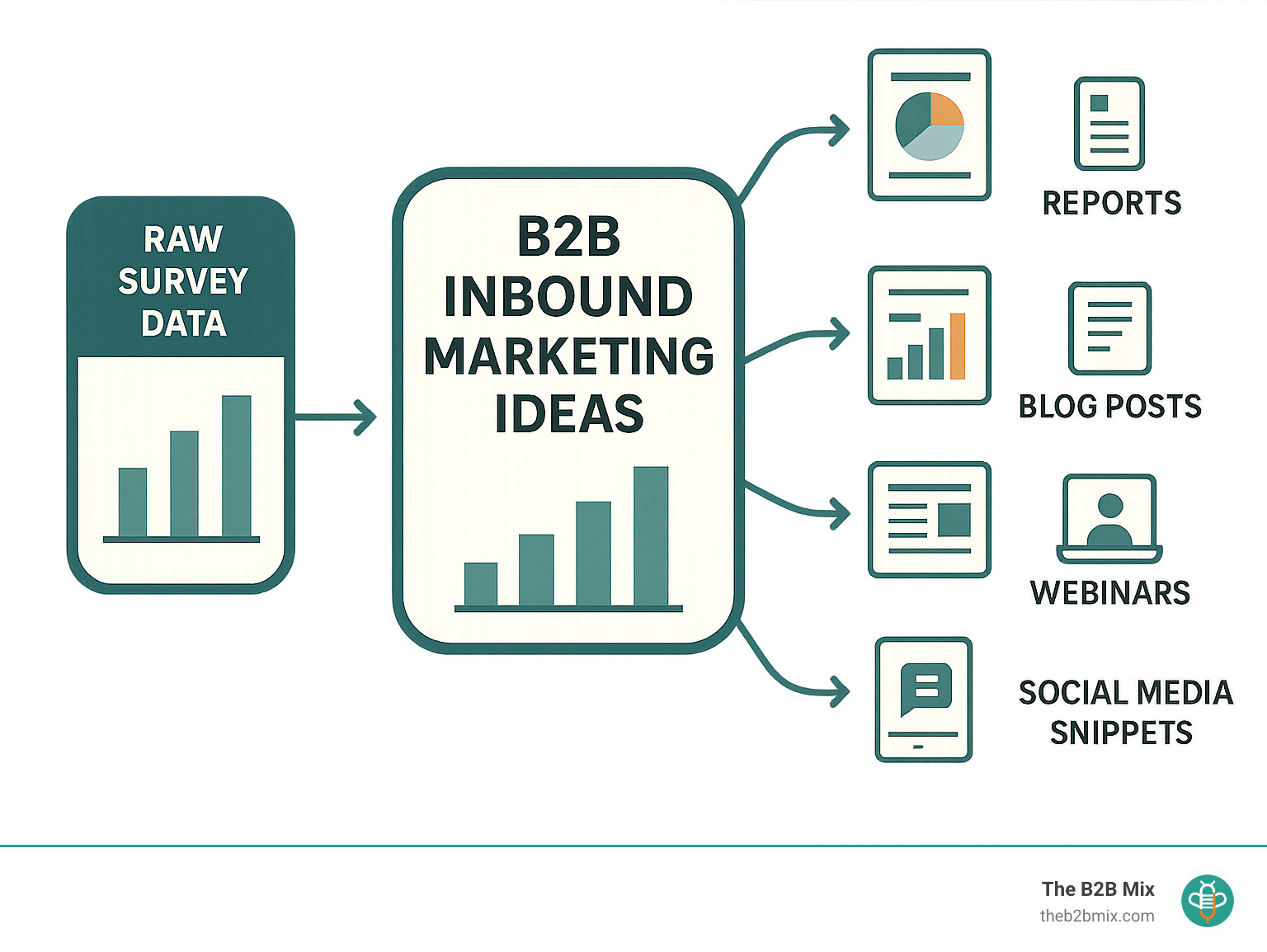
Where many companies fall short is in maximizing their research investment. Don't just publish a PDF report and call it a day. Turn your findings into a multi-format content package—create eye-catching infographics for social sharing, write blog posts exploring specific findings, host webinars discussing implications, and develop bite-sized social snippets to drip out over months.
The beauty of proprietary research is how it simultaneously serves multiple marketing objectives. First, it naturally attracts high-quality backlinks as industry publications cite your findings. Second, it fills your content calendar for months with derivative pieces. Third, original research gives your sales team valuable talking points and positions your brand as the thought leader who actually knows what's happening in the industry. And yes, it builds your email list through strategically gated research reports.
The most successful research initiatives aren't one-and-done projects—they become annual traditions that your industry starts to anticipate and rely on. With each edition, your authority compounds.
Want to build a more strategic approach to content that incorporates proprietary research? Check out our Content Operations Framework Guide for a comprehensive roadmap to organizing your content for maximum impact.
B2B Inbound Marketing Idea #2: Run Video-First Virtual Events for ABM
Here's a surprising statistic: According to Grand View Research, the virtual events market is projected to grow at a CAGR of 20% from 2025 to 2030. This isn't just a lingering pandemic hangover—it's a fundamental shift in how B2B companies can connect with prospects. And it opens up exciting possibilities for innovative B2B inbound marketing ideas that blend video experiences with account-based marketing strategies.
But let's be clear—we're not talking about those dreadful webinars where someone drones on for 45 minutes while you check your email. Today's virtual events are interactive experiences that can be custom to specific target accounts, creating personalized engagement that scales beautifully.

Consider creating account-specific content tracks that speak directly to different industries or company sizes. When a financial services firm attends your cybersecurity summit, they get content custom to their regulatory environment, not generic advice that applies to everyone (and therefore no one).
What makes this approach so powerful is how it transforms passive viewing into active participation. Interactive elements like polls and breakout rooms keep attendees engaged, while virtual networking lounges create those "hallway conversations" that often lead to the best connections. Unlike in-person events, you can track every interaction, which sessions they attended, what questions they asked, and which resources they downloaded, giving you invaluable intent data for follow-up.
The magic happens when your event concludes, but your marketing continues. By turning your live event into an on-demand resource center, you extend its lifecycle for months. Those who couldn't attend live can still engage with your content, and sales teams can share specific sessions with prospects based on their interests.
Ready to explore more ways to lift your digital marketing game? Check out our comprehensive guide to B2B Digital Marketing Ideas for strategies that complement your virtual event efforts.
B2B Inbound Marketing Idea #3: Build SEO Topic Cluster Flywheels
Topic clusters aren't just another SEO tactic—they've completely transformed how successful B2B companies approach content creation. Think of them as interconnected content ecosystems that mirror how search engines actually understand relationships between topics. The best part? Once built, these clusters create a self-reinforcing flywheel that continually builds authority and captures traffic at every stage of your buyer's journey.
Here's the magic behind topic clusters: They create a content architecture that both search engines and humans love. You start with a comprehensive pillar page covering a core topic relevant to your business. Then, you develop multiple in-depth content pieces that explore specific aspects of that main topic. The secret sauce? Connecting everything with strategic internal links that signal these topical relationships to search engines.
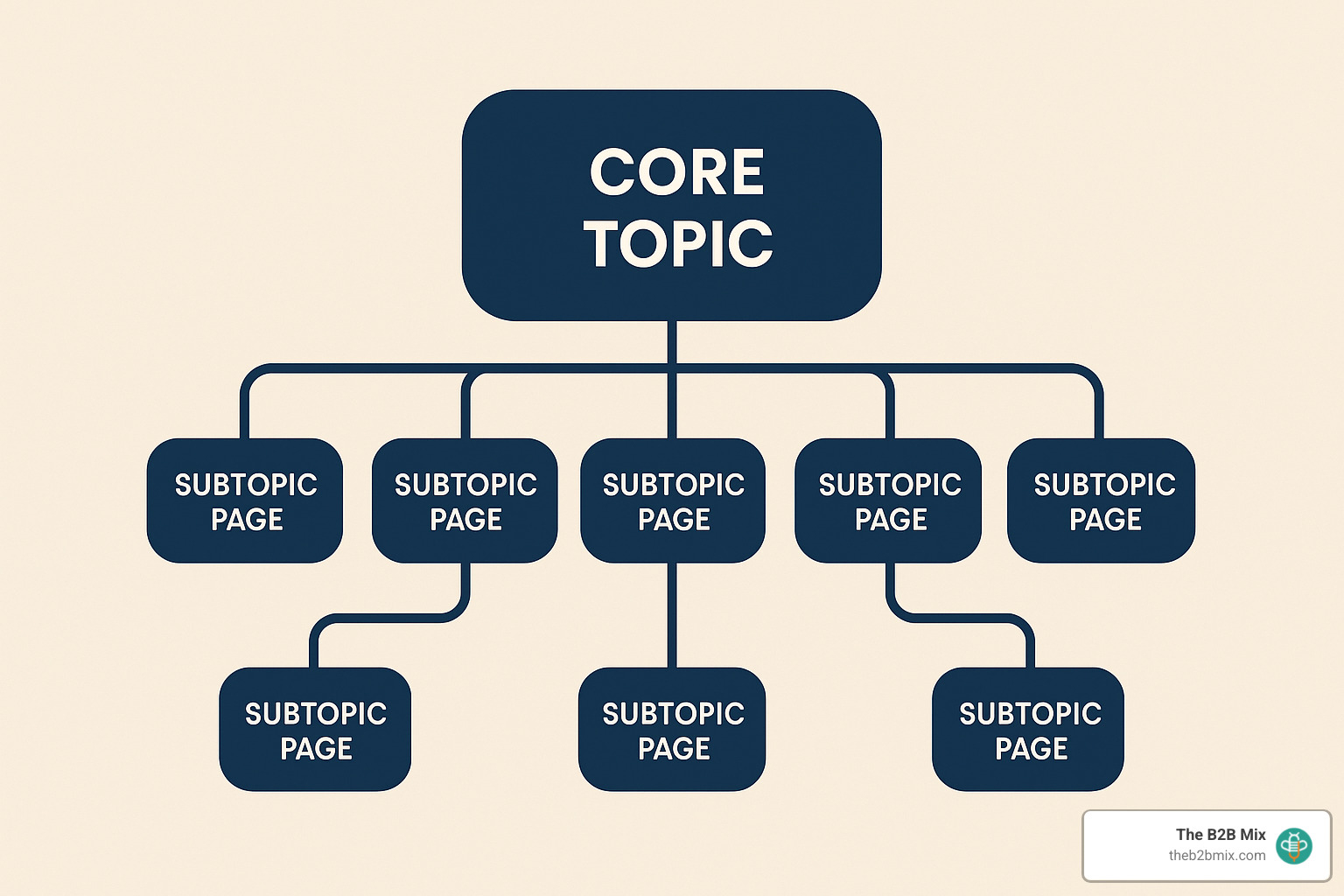
This approach works exceptionally well in the B2B space for several reasons. First, it perfectly aligns with how B2B buyers naturally research complex solutions—they rarely search for one keyword and make a purchase decision. Instead, they explore multiple related topics as they educate themselves. Second, topic clusters help establish your true topical authority in specific niches, rather than just random keyword rankings.
Additionally, these clusters create multiple entry points for organic search traffic, provide natural internal linking opportunities, and support the longer B2B sales cycle with content mapped to every stage of the buyer's journey.
Tools like Surfer can be incredibly helpful for identifying semantic relationships between topics and ensuring your content covers all the relevant aspects that search engines expect to see in authoritative content.
How topic clusters open up endless B2B inbound marketing ideas
One of the biggest headaches in content marketing is consistently generating fresh ideas that actually serve your audience. The beauty of the topic cluster approach is that it creates a systematic framework for ongoing content ideation.
Start by mapping the buyer's journey within each cluster. What specific questions do prospects have at the awareness, consideration, and decision stages? Then, identify content gaps by comprehensively analyzing which subtopics you haven't yet covered.
Regular monitoring of search trends reveals how people's questions about your topic evolve over time, while competitor analysis can uncover angles you've missed that you can address.
For example, if you sell marketing automation software, your main pillar might be "B2B Marketing Automation," with clusters around email workflows, lead scoring, behavioral tracking, and analytics. Each cluster naturally spawns dozens of specific articles addressing questions within that subtopic.
Keyword mapping becomes much more strategic with this approach. Rather than chasing random keywords, you're building a coherent content universe that establishes your authority on topics that matter to your business. You'll never run out of meaningful topics to cover as you identify content gaps.
This approach transforms SEO from a tactical checkbox activity into a strategic asset that generates compounding returns over time. The more complete your clusters become, the stronger your authority signals grow, creating a true flywheel effect for your B2B inbound marketing ideas.
For more comprehensive guidance on developing a content strategy that drives real business results, visit our B2B Content Strategy resource.
B2B Inbound Marketing Idea #4: Activate Employee Social Advocacy

Most companies completely overlook the goldmine of social media influence sitting right in their office. Your employees aren't just team members—they're potentially your most powerful brand ambassadors, bringing authenticity that your corporate accounts simply can't match.
The numbers tell the story: employee social posts generate a whopping 8x more engagement than brand posts and get reshared 24x more frequently. Talk about bang for your buck! Employee advocacy is one of the most cost-effective B2B inbound marketing ideas you can implement today.
Think about it—people trust people, not logos. When your network sees a genuine post from someone they know personally sharing insights about your company, it carries significantly more weight than the same content coming from your official brand account.
Ready to tap into this powerful resource? Here's how to build an employee advocacy program that actually works:
Start with your enthusiastic volunteers, not your entire company roster. Your marketing team, sales professionals, and executives who already understand content value make perfect initial advocates. Forcing participation only leads to half-hearted sharing that audiences can spot from a mile away.
Provide clear guidance without being restrictive. A quick training session on social best practices gives employees confidence to engage professionally online while maintaining their authentic voice. Remember—you want their personality to shine through, not corporate speak.
Create a content library with pre-approved posts and suggested captions that employees can personalize to make sharing painless. The easier you make it, the more consistent participation you'll see. Tools like LinkedIn's employee notifications feature can alert team members when there's fresh content to share.
Remember to celebrate your social superstars! Recognition goes a long way toward sustaining momentum. Highlight successful employee posts in team meetings or your internal newsletter. Some companies even create friendly competition with small incentives for consistent participation.
The real magic happens when employees add their personal perspective rather than simply hitting "share." A technical whitepaper that generated modest traffic from a corporate account can transform into a lead-generating machine when engineers share it with stories about the real-world problems they solved.
With LinkedIn's algorithm increasingly favoring individual users over company pages, your employees' voices can help your content reach audiences that might never see your corporate posts. This algorithmic advantage and the trust factor of personal connections create an inbound marketing powerhouse.
For more creative ways to energize your social presence, check out our comprehensive guide to B2B Social Media Content Ideas that will lift both your corporate and employee advocacy efforts.
B2B Inbound Marketing Idea #5: Offer Product-Led Growth (PLG) On-Ramps
Remember when you had to talk to a salesperson just to see how a product worked? Those days are fading fast. Product-led growth (PLG) has revolutionized how B2B buyers evaluate solutions, and it's one of the most effective B2B inbound marketing ideas you can implement today – even if you don't sell software.
The beauty of PLG is its simplicity: Let prospects experience your value before they ever need to talk with sales. It's like offering a test drive that builds trust while showcasing what makes your solution special.
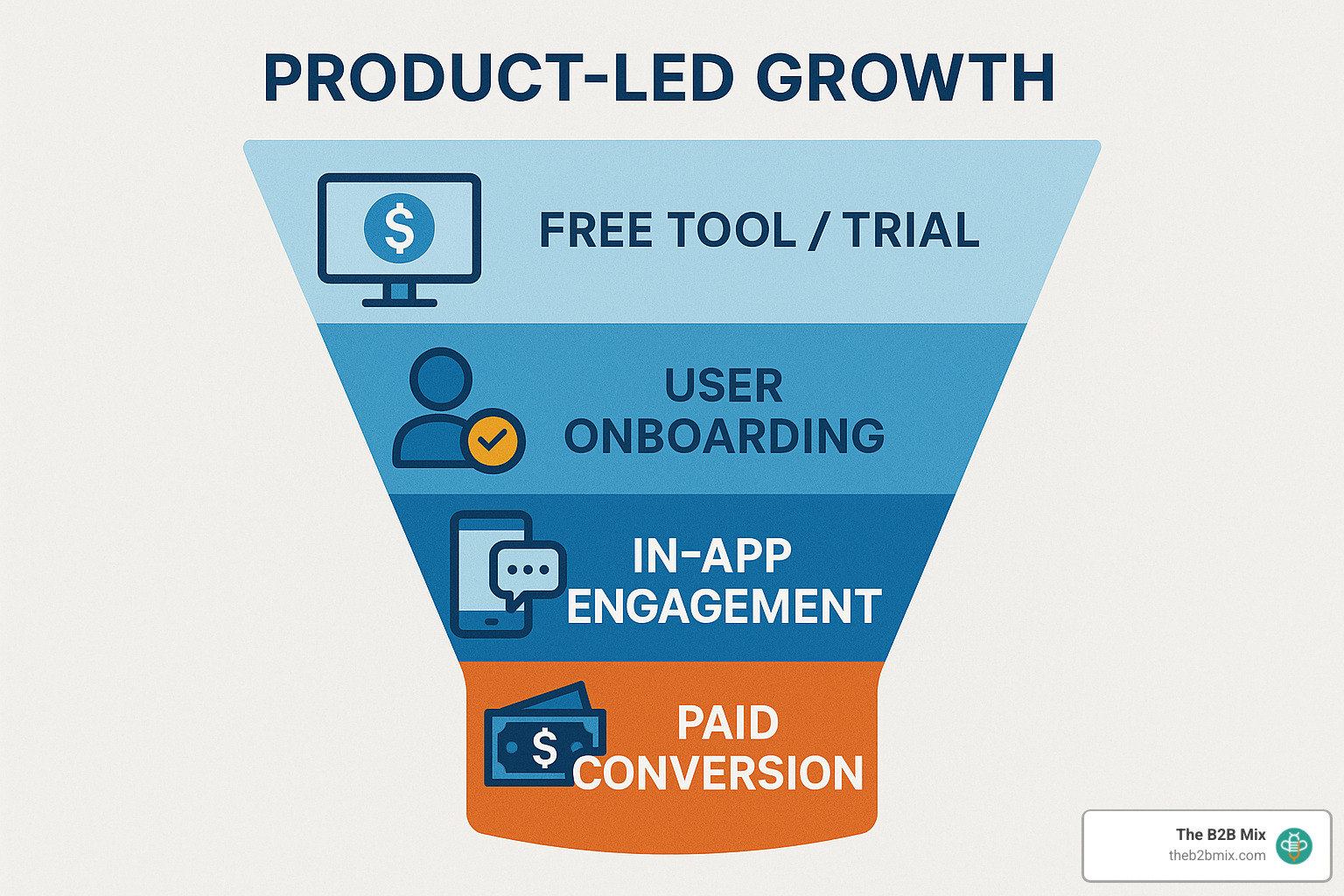
Here's how you can incorporate PLG principles into your inbound strategy:
Create standalone free tools that solve specific problems for your audience. Think calculators, assessment tools, or templates that deliver immediate value while subtly demonstrating your expertise. A marketing agency might offer a free content gap analyzer that shows prospects exactly where their strategy needs help.
Design intuitive self-service experiences with clear onboarding that doesn't require sales assistance. The less friction, the better! Ensure users can get started and find value within minutes, not hours or days.
Build in-app education that guides users toward those crucial "aha moments" where they truly understand your solution's value. Tooltips, contextual help, and interactive walkthroughs can all help prospects find features they might otherwise miss.
Use product engagement data to identify your most active users and personalize your follow-up. When someone is actively using your free tool or trial, that's the perfect moment for targeted, helpful outreach, not a generic sales pitch.
This approach aligns perfectly with HubSpot's flywheel model, where delighted customers become promoters who attract new prospects. Giving users a hands-on experience builds trust and reduces friction throughout the buying process.
Even if you don't offer software, you can apply these principles. Consulting firms can provide free assessments, manufacturers can offer sample kits, and service providers can create interactive decision tools that help prospects understand their needs.
One of our clients, a logistics company, created a shipping cost calculator that helps prospects compare options while demonstrating the company's expertise. It's now their top lead generator, bringing in qualified prospects who already understand the value proposition.
B2B Inbound Marketing Idea #6: Deploy AI-Powered Hyper-Personalization
Remember when just adding someone's first name to an email felt cutting-edge? Those days are long gone. Today's AI-powered personalization tools have transformed what's possible in B2B marketing, creating custom-crafted experiences for each prospect.
This advanced approach to personalization stands out among B2B inbound marketing ideas because it directly impacts engagement and conversion rates. When you tailor content and experiences to each prospect’s needs, you’re far more likely to earn their trust and business, making hyper-personalization a strategy that’s hard to overlook.
The beauty of AI-powered personalization is that it works across your entire marketing ecosystem. Instead of generic content that tries to appeal to everyone (and ends up resonating with no one), you can deliver exactly what each prospect needs at precisely the right moment.
Start by capturing meaningful behavioral signals—which pages prospects visit, which resources they download, and how long they spend on specific content. These digital footprints reveal intent in ways that basic form fields never could.
With this intelligence, you can transform your website into a dynamic experience that adapts in real time. Headlines, images, case studies, and calls to action can all shift based on a visitor's industry, role, or previous interactions with your content.
Content recommendations become uncannily relevant when powered by AI. Rather than showing everyone your "most popular" resources, you can suggest the exact materials that address each prospect's specific challenges, creating those "how did they know?" moments that build trust.
Predictive lead scoring takes the guesswork out of prioritization. By analyzing patterns across thousands of interactions, AI can identify which behaviors actually indicate purchase intent, helping your sales team focus on prospects who are genuinely ready to buy.
Personalization that turns these B2B inbound marketing ideas into revenue
The real magic happens when personalization connects directly to revenue outcomes. This isn't about surface-level tricks – it's about delivering substantively different experiences based on prospects' buying journey.
Someone just beginning their research needs educational content that builds awareness, while a prospect comparing solutions needs detailed comparison guides and ROI calculators. AI helps you identify these stages and deliver accordingly.
Purchase intent signals become incredibly valuable when you can spot them automatically. When a prospect suddenly downloads three case studies in a single session or returns to your pricing page multiple times, that's a hand-raise that shouldn't be missed.
Role-based personalization acknowledges that different stakeholders care about different things. A CFO worries about ROI and cost justification, while a technical implementer focuses on integration and support. Your messaging should adapt accordingly.
Dynamic nurture sequences replace one-size-fits-all email campaigns. When a prospect's engagement patterns shift, your communication strategy should shift too, automatically pivoting to address their evolving interests.
The good news? Tools like HubSpot's smart content features make implementing many of these personalization tactics surprisingly accessible, even without a team of data scientists.
For more inspiration on incorporating AI into your marketing toolkit, check out our comprehensive guide to 20 Must-Try AI Content Creation Tools. These tools can help you scale personalization efforts while maintaining that crucial human touch that builds genuine connections.
B2B Inbound Marketing Idea #7: Create Interactive Calculators & ROI Tools
In today's sea of static PDFs and endless case studies, interactive content cuts through the noise like nothing else. Interactive calculators and ROI tools are particularly powerful B2B inbound marketing ideas because they engage prospects actively rather than passively, inviting them to participate rather than just consume.
What makes these tools so effective? They help your prospects quantify problems they might only vaguely understand and visualize the concrete impact your solution could deliver. This creates both an emotional connection ("wow, I didn't realize how much this issue is costing us") and a rational justification for continuing the conversation.
Here's a warm, human approach to implementing this strategy:
Start by identifying the key metrics that keep your prospects up at night. What numbers do they care about most? What costs or inefficiencies does your solution address in their daily operations?
Design an intuitive, friendly interface that doesn't overwhelm. The best calculators require just a few simple inputs to generate meaningful insights. Every field you add creates friction that might cause someone to abandon the tool.
Always provide immediate value before asking for anything in return. Show preliminary results right away, giving prospects that "aha" moment before requesting their contact information.
Once they've seen the initial value, offer a comprehensive report with deeper analysis behind a simple lead form. This is your value exchange – they get detailed insights, you get permission to continue the conversation.
Connect these tools to your sales process. The prospect's input and results should flow directly to your sales team, giving them rich context for personalized follow-up conversations.
For example, a manufacturing equipment provider might create a "Production Efficiency Calculator" that helps prospects estimate how much money they're leaving on the table with their current setup. The tool might show a basic efficiency score immediately, while offering a detailed breakdown of potential savings areas in a downloadable report.
These interactive tools serve multiple roles in your inbound strategy. They attract prospects who are actively searching for solutions to specific problems. Additionally, they educate users about issues they may not fully comprehend. Finally, they naturally qualify leads based on the information they input. And perhaps most valuably, they arm your sales team with context that makes follow-up conversations more relevant and helpful.
The beauty of calculators and ROI tools is that they create a natural bridge between marketing and sales. They help prospects justify investments internally while giving your team the insights needed to have more meaningful conversations.
B2B Inbound Marketing Idea #8: Hit the Airwaves with a Podcast-Tour Blitz
Creating your own podcast demands significant time and resources, but there's a smarter way to tap into the podcast ecosystem: becoming a sought-after guest. A strategic podcast guest tour stands out among effective B2B inbound marketing ideas because it connects you directly with highly engaged, niche audiences without the ongoing production commitment.
Think about it—industry-specific podcasts have already worked hard to build a community of listeners who care deeply about your subject matter. These aren't casual scrollers; they're actively seeking knowledge in your exact area of expertise.

Here's how to make a podcast guest tour work for your B2B company:
First, identify relevant podcasts where your ideal customers are already tuning in. Look beyond subscriber counts—a smaller podcast that perfectly matches your niche often delivers better results than broader shows with larger audiences.
Next, develop unique talking points that provide genuine value while subtly showcasing your expertise. The key word here is "subtly"—nobody wants to listen to a 40-minute sales pitch. Instead, share insights, stories, and actionable advice that listeners can immediately apply.
When pitching podcast hosts, personalization is everything. Generic emails get ignored. Show that you've listened to their show and explain how your expertise fills a gap in their content calendar. Hosts constantly look for guests who will make them look good to their audience.
Before each appearance, prepare thoroughly by researching the podcast's style, typical questions, and audience demographics. A guest who clearly customizes their message to the specific show stands out memorably.
Creating a dedicated landing page for podcast listeners is a game-changer. When the host asks, "Where can people find you?" don't just send them to your homepage. Direct them to a custom URL with resources mentioned in your interview and a clear next step. This dramatically improves conversion rates.
Finally, don't let your podcast appearances disappear into the digital ether. Repurpose the content across your marketing channels. Each hour-long interview can spawn multiple blog posts, dozens of social media snippets, and valuable additions to your email nurture sequences.
The real magic of this approach lies in borrowing credibility. When a trusted podcast host introduces you as an expert, their audience instantly gives you the benefit of the doubt. This transferred trust is incredibly powerful, especially for complex B2B solutions that benefit from longer discussions.
For example, imagine a cybersecurity firm's CTO appearing on five industry podcasts discussing emerging threats. Each appearance naturally mentions their free vulnerability assessment, driving pre-qualified traffic to a purpose-built landing page. These visitors convert at dramatically higher rates than cold traffic because they've already spent 30+ minutes listening to and connecting with your expert perspective.
A well-executed podcast tour creates a ripple effect of authority that extends far beyond the initial listeners. The backlinks from podcast show notes, social mentions from hosts, and the content you create from these appearances all contribute to a sustainable boost in your digital presence.
B2B Inbound Marketing Idea #9: Build a Content Repurposing Engine
Creating high-quality content demands significant time and resources, yet many B2B companies use their premium assets just once before moving on to the next project. This approach leaves tremendous value on the table! Implementing a systematic content repurposing strategy is one of the most cost-effective B2B inbound marketing ideas because it multiplies your return on every piece of content you create.
Content repurposing isn't merely about efficiency, though that's certainly a benefit. It's about connecting with different audience segments who prefer to consume information in various formats across multiple platforms. Some prospects prefer quick visual content, while others want in-depth written analysis or audio they can listen to during their commute.
Here's how to build your content repurposing engine:
Start by creating cornerstone content pieces—comprehensive, high-value assets that contain multiple insights and data points. These become your "content gold mines" from which you can extract value for months. Then, map different content formats to your buyer personas, understanding which types resonate with different segments of your audience.
Developing a systematic repurposing workflow is crucial. This might involve having your design team automatically create social graphics from new blog posts or having your video editor create short clips from webinar recordings. The goal is to make repurposing a standard part of your content production process, not an afterthought.
Distribution strategy matters too. Each platform has its strengths—LinkedIn might work best for your executive summaries, while YouTube is ideal for tutorial videos derived from your how-to guides. Being strategic about where you place each format maximizes its impact.
For example, imagine you've created an in-depth market research report. This single asset could transform into a webinar presenting key findings, a series of focused blog posts, an eye-catching infographic, a slide deck for your sales team, dozens of social media posts, a thought-provoking podcast episode, and a video summary highlighting surprising findings.
This approach ensures your best insights reach the broadest possible audience while accommodating different learning preferences and consumption habits.
Why these B2B inbound marketing ideas multiply ROI
The magic of content repurposing is how it delivers exponential returns on your marketing investment. First, there's the workflow efficiency factor—creating derivatives requires significantly less time than developing entirely new content from scratch. Your team can produce three repurposed pieces in the time it might take to create one new asset.
Channel amplification is another major benefit. Each content format opens different distribution opportunities, expanding your reach to audiences you might otherwise miss. Your podcast listeners might never read your blog, and your visual learners might skip your written reports entirely.
Repurposing also reinforces your key messages by presenting them in different contexts. When prospects encounter similar insights across multiple channels, it strengthens your authority and makes your message more memorable.
Perhaps most importantly, repurposing extends the lifespan of valuable content that might otherwise be forgotten after its initial promotion. That webinar you hosted six months ago? It could find new life as a series of short video clips or an expanded guide.
From an SEO perspective, multiple content pieces targeting related keywords strengthen your topical authority and create more opportunities to rank for valuable search terms. Each derivative piece becomes another entry point to your expertise.
To maximize the visual impact of your repurposed content (crucial for engagement), check out our guide to 7 Useful Tips to Optimize Images for SEO.
B2B Inbound Marketing Idea #10: Orchestrate Hybrid Inbound-Outbound "Surround Sound"
Let's be honest—the whole "inbound versus outbound" debate is a bit like arguing whether you should use a fork or a spoon. Sometimes, you just need both! The most successful B2B companies have figured out that creating a "surround sound" effect with both approaches delivers the best results, especially for complex sales cycles with multiple decision-makers.
HubSpot's own research on outbound marketing confirms what many of us have experienced firsthand—neither approach works perfectly in isolation. When you blend them thoughtfully, magic happens.
Here's the beauty of this hybrid approach: your inbound content warms up prospects, so when outbound touches happen, they're received as helpful rather than intrusive. Think of it as making sure your prospects keep bumping into you wherever they go—but in a good way, not a restraining order kind of way!
The most effective way to implement this strategy is to use the behavioral data from your inbound efforts to make your outbound activities laser-focused. When someone spends fifteen minutes reading your case study on supply chain optimization, that's your cue to reach out with additional insights specifically related to what interests them.
Social listening becomes your secret weapon in this hybrid world. By monitoring conversations about industry challenges, competitor mentions, and specific pain points, you can identify the perfect moment for a helpful outreach that feels almost psychic in its timing.
The real magic happens when your sales and marketing teams are completely aligned. Your marketing content educates prospects, and your sales team continues that education in their conversations rather than diving straight into pushy product talk.
| Metric | Inbound Only | Outbound Only | Hybrid Approach |
|---|---|---|---|
| Lead Quality | High | Variable | High |
| Time to Close | Longer | Shorter | Optimized |
| Cost per Lead | Lower | Higher | Balanced |
| Lead Volume | Gradual Growth | Immediate Results | Consistent Pipeline |
| Brand Building | Strong | Limited | Comprehensive |
Different buyer personas will naturally gravitate toward different engagement styles. Some executives want to research quietly through your content, while others prefer a direct conversation right away. The hybrid approach respects these differences instead of forcing everyone through the same funnel.
Retargeting is particularly powerful in this approach. When someone visits your pricing page but doesn't convert, showing them targeted ads with customer testimonials or ROI calculators keeps your solution top-of-mind while addressing potential hesitations.
What makes these B2B inbound marketing ideas truly powerful is how they complement each other. Your inbound content builds credibility, making outbound outreach more welcome, while your outbound activities drive traffic back to your inbound resources. It's a virtuous cycle that builds momentum over time.
Frequently Asked Questions about B2B Inbound Marketing
How does the B2B buyer's journey influence inbound tactics?
Understanding the B2B buyer's journey is like having a roadmap for your marketing efforts. Each stage requires a different approach to meet your prospects where they are.
During the Awareness Stage, your future customers are just beginning to recognize they have a problem. They're not ready for your sales pitch yet! This is where educational blog posts, thought leadership articles, and high-level guides shine. These resources help prospects put a name to their challenges while subtly introducing your company as a helpful resource.
As prospects move into the Consideration Stage, they actively explore solutions to their defined problem. Now's the perfect time to offer comparison guides, detailed case studies, and interactive webinars that showcase your expertise. Your goal here is to help them evaluate different approaches while positioning your solution as uniquely valuable.
When prospects reach the Decision Stage, they're ready to choose a specific vendor. This is when product demos, technical documentation, and ROI calculators become crucial. These resources help internal champions justify the purchase to other stakeholders and overcome the final problems to conversion.
Remember, though, real B2B buying journeys rarely follow a straight line! Your B2B inbound marketing ideas should create multiple entry points at each stage, allowing prospects to jump in wherever they are in their process rather than forcing them through a rigid sequence.
What KPIs prove that these ideas are working?
Measuring the success of your inbound marketing efforts requires looking beyond surface-level metrics to understand what's actually driving business results.
Start with traffic metrics like organic growth, referral sources, and individual page performance to gauge your visibility. But don't stop there! Engagement metrics such as time on page, pages per session, and content downloads reveal whether your content is actually resonating with visitors.
To connect marketing activities to business outcomes, track conversion metrics, including conversion rates at each funnel stage and cost per lead. Then follow prospects through your pipeline with metrics measuring marketing-influenced opportunities and how quickly leads progress.
What matters most are the revenue metrics: customer acquisition cost, lifetime value, and overall marketing ROI. These bottom-line numbers tell you whether your marketing investments are paying off.
Every business is different, so your most important KPIs should align with your specific goals. We recommend focusing on metrics that directly connect marketing activities to revenue rather than getting distracted by vanity metrics like social media followers that might look impressive but don't necessarily impact your bottom line.
How do I choose the right tools without bloating my martech stack?
Tool overload is the silent killer of marketing efficiency. When implementing these B2B inbound marketing ideas, resist the temptation to adopt every shiny new platform that promises marketing miracles.
Start by building around a solid foundation—an integrated marketing automation platform like HubSpot can serve as your marketing command center. This core system should handle most of your essential needs, from email marketing to contact management and basic analytics.
Only add specialized tools when they address specific gaps your core platform can't fill. For example, you might need dedicated software for advanced SEO research or interactive content creation that goes beyond your platform's capabilities.
When evaluating new tools, prioritize those with strong integration capabilities. The last thing you need is another data silo! Your tools should talk to each other, creating a seamless flow of information across your marketing ecosystem.
Don't forget to conduct regular audits of your technology stack. Set calendar reminders to review your tools quarterly, eliminating redundant or underused solutions that drain your budget without delivering value.
Most importantly, focus on adoption before expansion. Ensure your team fully utilizes your existing tools before adding new ones. The most powerful marketing technology in the world won't help if your team isn't comfortable using it.
The goal isn't to have the biggest tech stack—it's to create a streamlined, integrated system where data flows freely between components, empowering your team to execute marketing strategies efficiently and effectively.
Conclusion
Implementing innovative B2B inbound marketing ideas isn't just about jumping on the latest trends—it's about building genuine competitive advantage through deeper connections with your audience and smarter lead generation.
The most successful B2B companies don't see inbound marketing as a one-time campaign. Instead, they approach it as an ongoing improvement cycle that keeps improving over time.
This cycle starts with implementing strategic initiatives based on real customer insights. Then comes the crucial step of measuring results across your entire funnel—not just at the top where traffic comes in, but all the way through to revenue. With that data in hand, you can refine your approaches, doubling down on what's working and adjusting what isn't. Finally, you scale the winners while continuously testing fresh ideas.
This approach is so powerful because it naturally evolves alongside changing buyer behaviors. As your prospects' research habits shift, your marketing adapts right alongside them.
At The B2B Mix, we roll up our sleeves and help B2B companies implement these strategies with a refreshing focus on tangible results. We're not interested in vanity metrics that look good in reports but don't move the needle for your business. Instead, we combine practical HubSpot expertise with down-to-earth campaign execution to build marketing systems that consistently deliver qualified leads and measurable ROI.
We believe the best marketing feels less like being marketed to and more like finding exactly the help you need, right when you need it. That's the essence of great inbound marketing—creating a single source of truth that guides prospects through their buying journey with helpful, relevant content at every step.
Ready to move beyond basic blogging and transform your inbound marketing with strategies that actually drive growth? Explore our B2B Digital Marketing Services to learn how we can help you implement these ideas and build a sustainable engine for qualified leads and revenue.