
Here's a fun one.
You closed the deal. Your team delivered. The customer is thrilled. And three weeks later, the money still isn't in the bank.
Where is it? Nowhere dramatic. Just stuck in the gap between "we sold it" and "they paid for it." For a lot of B2B companies, that gap isn't a process. It's a pile of manual steps, a couple of spreadsheets, and one person who knows where everything is (and is currently on vacation).
This is the unglamorous part of revenue nobody puts on a slide. So let's put it on a slide.
Second in our Revenue Hub series. The first one was about closing the deal faster. This one's about actually getting paid for it. New to Revenue Hub? Here's the rundown.
The work is done. The system isn't.
Think about what actually has to happen after you win.
Someone turns the deal into an invoice. By hand, usually. They re-type what sold details into the accounting system and hope it matches the quote. (It does not always match the quote.) The invoice goes out... eventually. Somebody has to remember to follow up when it's late. Then somebody else asks "hey, how much does the customer owe right now?" and the room goes quiet.
None of that is hard. All of it is manual. And manual is where money goes to wait.
Getting paid late sucks. For cash flow, sure. But also for the relationship, because nothing says "we've got it together" like a wrong invoice and a late one.
The two places it breaks
Accuracy: What sales sold and what finance billed don't always line up. The quote said one thing, the invoice said another, and now you're issuing a correction and apologizing to a customer who was, for a minute, annoyed with you. Multiply that across a year. It adds up.
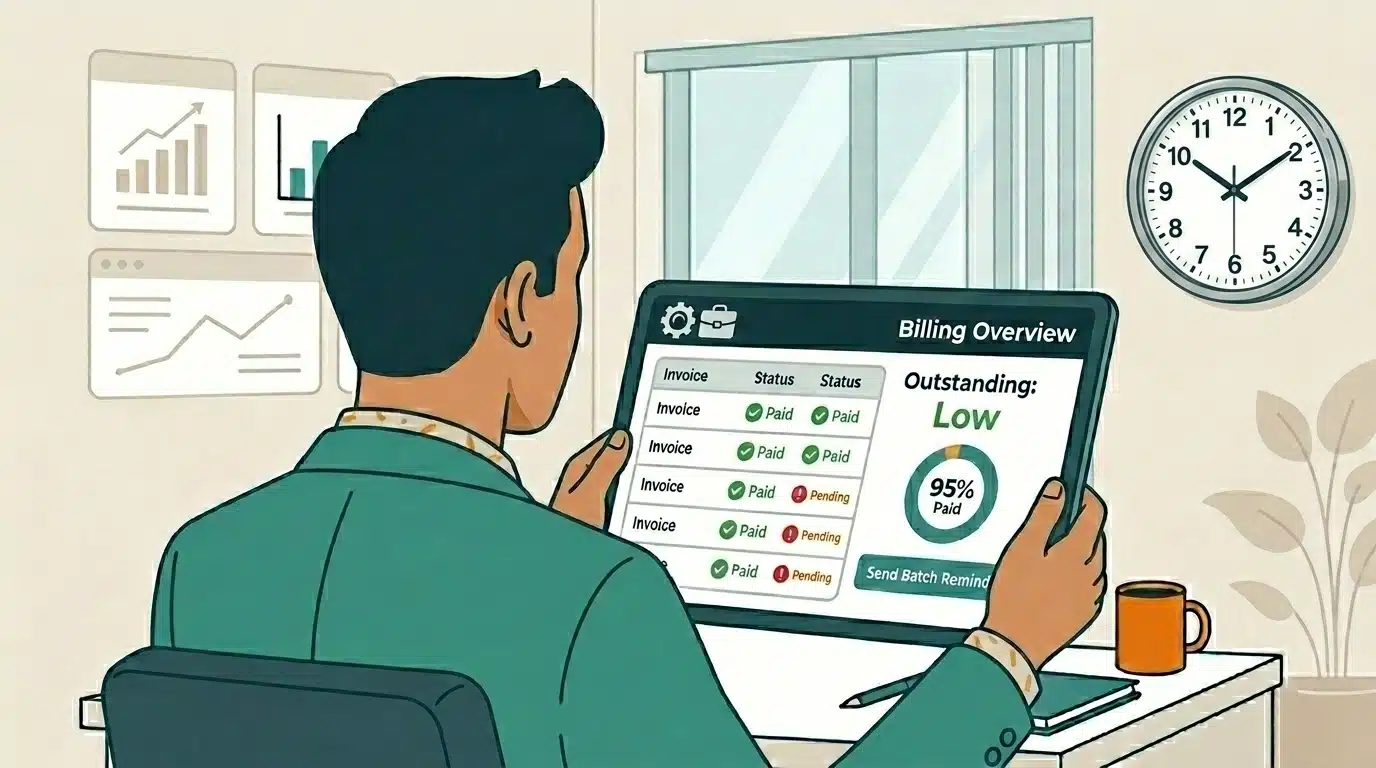
Visibility: Ask most teams what's outstanding right now, today, and you get a "let me pull that together." Translation: nobody knows off the top of their head. You can't manage what you can't see. You definitely can't chase it.
Here's the real kicker. The information needed to bill correctly already exists, only it lives in a different system than the one doing the billing. Sales knows what they sold. Finance bills from somewhere else. The two were never introduced.
"But we have accounting software"
OK. Good. You should.
But your accounting system doesn't know what your sales team actually agreed to. It knows what somebody typed into it. Those are not the same thing, and the difference is exactly where the errors and the delays live.
This is not a "rip out QuickBooks" conversation. (Please don't rip out your accounting system because of a blog post.) It's a "stop re-keying the same deal three times" conversation.
Where Revenue Hub fits
This is the part HubSpot's new Revenue Hub is for, and it's why we're bringing it up now.
When the signed deal becomes a contract that lives in HubSpot, the billing follows that contract. The invoice reflects what was actually sold, on the schedule that was actually agreed, even when that schedule is weird. Some upfront, some monthly, different start dates on the same agreement? Fine. And because it's all in one place, "what's outstanding right now" stops being a research project.
Two honest notes, because I'm not going to oversell it:
- What you can use depends on your plan and seats. Check what your portal already includes before you get excited.
- It works alongside your accounting system, it doesn't replace your accountant. The point is a clean handoff from "what we sold" to "what we billed," not a finance department in a box.
Revenue Hub isn't the hero here. You are. It just stops your team from being the human glue holding five systems together, which was never a great use of anybody.
Do this to get paid faster
Pull your worst invoice from the last quarter. The one that went out late, or wrong, or both. Trace it backwards. How many times did someone re-type that information? Which systems did it touch? How long did it sit before anyone noticed?
That number is what the gap is costing you. Once you've seen it, you can't un-see it. Good. Go fix it.
If you want a second set of eyes on where your quote-to-cash process actually leaks, book a quick call. We'll tell you if it's a real problem or if you're already fine.
FAQs
Often because invoicing is manual and disconnected from what was sold. Someone re-keys deal details into a separate accounting system, invoices go out late, and no one has a clear, real-time view of what's outstanding. The delay is usually process friction, not the customer refusing to pay.
They usually happen when the system that holds the deal (the CRM) and the system that bills (accounting software) aren't connected. The invoice is built from what someone typed in, not from what was actually quoted and agreed, so the two can drift apart and require corrections.
When a signed deal becomes a contract in HubSpot, billing follows that contract, so invoices reflect what was actually sold and the agreed schedule, including mixed cadences and start dates. Having quoting, contracts, billing, and payments in one place also makes it easier to see what's outstanding. What you can use depends on your HubSpot plan and seats, and it's designed to work alongside your accounting system rather than replace it.