

Why Marketing Campaign Operations Is the Missing Link in Your B2B Strategy
Marketing campaign operations is the specialized function that handles the planning, execution, tracking, and optimization of marketing campaigns from start to finish. While general marketing operations focuses on the broader infrastructure and strategy, campaign operations zeroes in on the tactical backbone that makes individual campaigns successful.
Quick Answer for Marketing Campaign Operations:
- What it is: The operational process that coordinates all aspects of campaign delivery - from audience segmentation and workflow automation to performance tracking and optimization
- Key difference: Campaign ops is tactical and campaign-focused, while marketing ops is strategic and infrastructure-focused
- Core responsibilities: Campaign planning, automation setup, data management, cross-team coordination, and performance reporting
- Business impact: Faster campaign launches, better data tracking, improved sales alignment, and clearer ROI visibility
If you're a B2B marketing manager drowning in disconnected tools and underperforming campaigns, you're not alone. Marketers who plan projects proactively are significantly more likely to report success, but most teams lack the operational backbone to make this happen consistently.
Campaign operations bridges the gap between your marketing strategy and actual results. It's the difference between launching campaigns that feel like throwing spaghetti at the wall versus running data-driven initiatives that predictably generate pipeline.
The challenge? Most B2B teams either don't have dedicated campaign operations resources, or they're trying to handle it ad-hoc alongside other responsibilities. This leads to messy data, slow launch cycles, and campaigns that can't prove their impact on revenue.
Key marketing campaign operations vocabulary:
Marketing Campaign Operations 101: How It Differs from Marketing Ops
Marketing campaign operations is the specialized subset of marketing operations that focuses on individual campaigns. While your broader marketing ops team thinks about tech stack architecture and data governance policies, campaign ops professionals ensure your next webinar series launches without a hitch.
Campaign ops transforms your campaign ideas into measurable results. These professionals build campaign infrastructure, analyze CRM audience data for targeting, and manage the tech stack that delivers campaigns to real humans.
Campaign ops vs. broader marketing operations
The key difference is focus and timeline. Campaign operations is tactical and project-focused, while broader marketing operations is strategic and infrastructure-focused.
| Aspect | Campaign Operations | General Marketing Operations |
|---|---|---|
| Focus | Tactical execution of specific campaigns | Strategic infrastructure and processes |
| Scope | Campaign-specific workflows and measurement | Organization-wide marketing technology and data |
| Timeline | Project-based, campaign lifecycle | Ongoing, always-on operations |
| Stakeholders | Campaign managers, demand gen, content teams | CMO, marketing leadership, IT, sales |
| Success Metrics | Campaign ROI, conversion rates, pipeline attribution | Campaign managers, demand gen, and content teams |
Your broader marketing ops team might spend months implementing a new marketing automation platform. Campaign ops then ensures each email campaign is segmented correctly, automated, and tracked for attribution.
Campaign operations serves as the connective tissue between marketing strategy and sales outcomes, ensuring cross-functional teams collaborate effectively with proper escalation paths and strategic alignment.
For more insights on building your marketing operations foundation, check out our guide on Marketing Operations & Technology: What You Need to Know.
Why Campaign Operations Matter for Modern B2B Teams
B2B marketing has gotten incredibly complex. Your buyers research extensively before talking to sales, campaigns span multiple channels, and everyone wants to know which marketing activities actually drive revenue. This is where marketing campaign operations becomes your secret weapon.
Business impact & strategic alignment
Speed is everything in today's market. Dedicated campaign operations processes enable faster campaign launches than teams that juggle operations alongside other tasks. Faster launches mean more time to test, iterate, and respond to what's working.
Revenue attribution is where campaign ops really shines. Without proper campaign operations, you're stuck with fuzzy answers when leadership asks, "Which campaigns are actually driving deals?" Campaign ops builds the tracking infrastructure to follow leads from first click to closed deals.
This alignment is crucial. Misalignment between sales and marketing is a significant reason for slowed or declining revenue. Campaign operations helps fix this by creating clear handoffs and shared visibility.
Collaboration superpowers
Marketing and sales alignment becomes a reality when campaign ops manages technical handoffs, proper lead scoring, routing leads to the right salespeople, and ensuring sales teams have context for effective follow-up.
Shared dashboards replace the chaos of everyone creating their own reports. Campaign operations builds unified views showing the complete customer journey from first touch to closed deal.
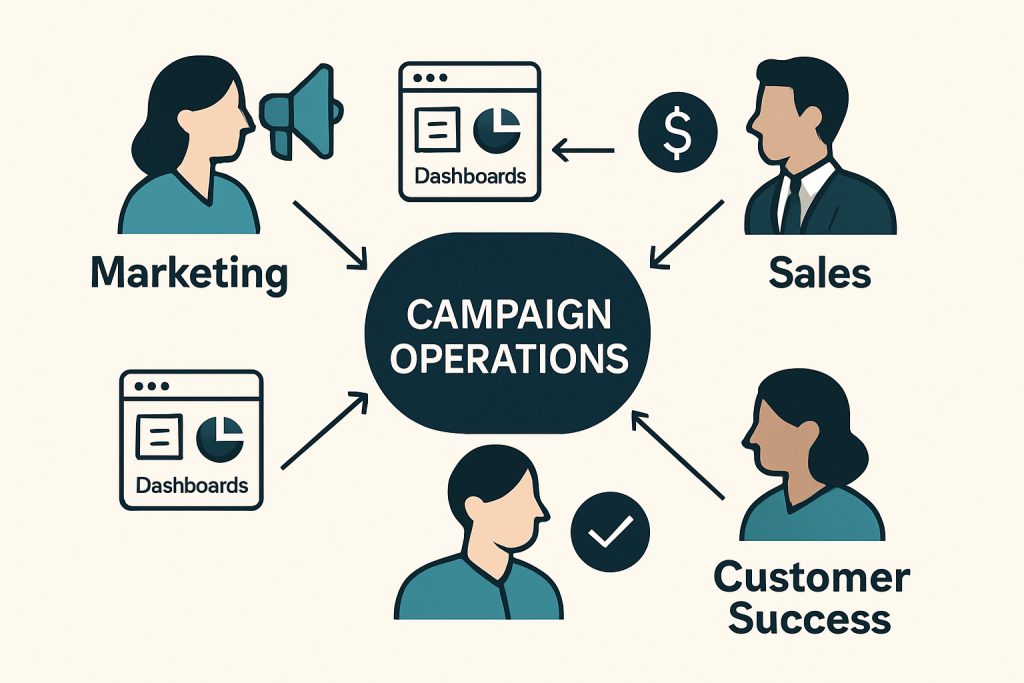
Teams that invest in campaign operations see better collaboration, faster problem-solving, and campaigns that actually move the revenue needle.
The Campaign Operations Lifecycle: Plan, Execute, Measure, Optimize
Think of marketing campaign operations like conducting an orchestra. Every instrument needs to come in at the right time, creating harmony instead of chaos. The campaign operations lifecycle provides the framework to make this happen consistently.
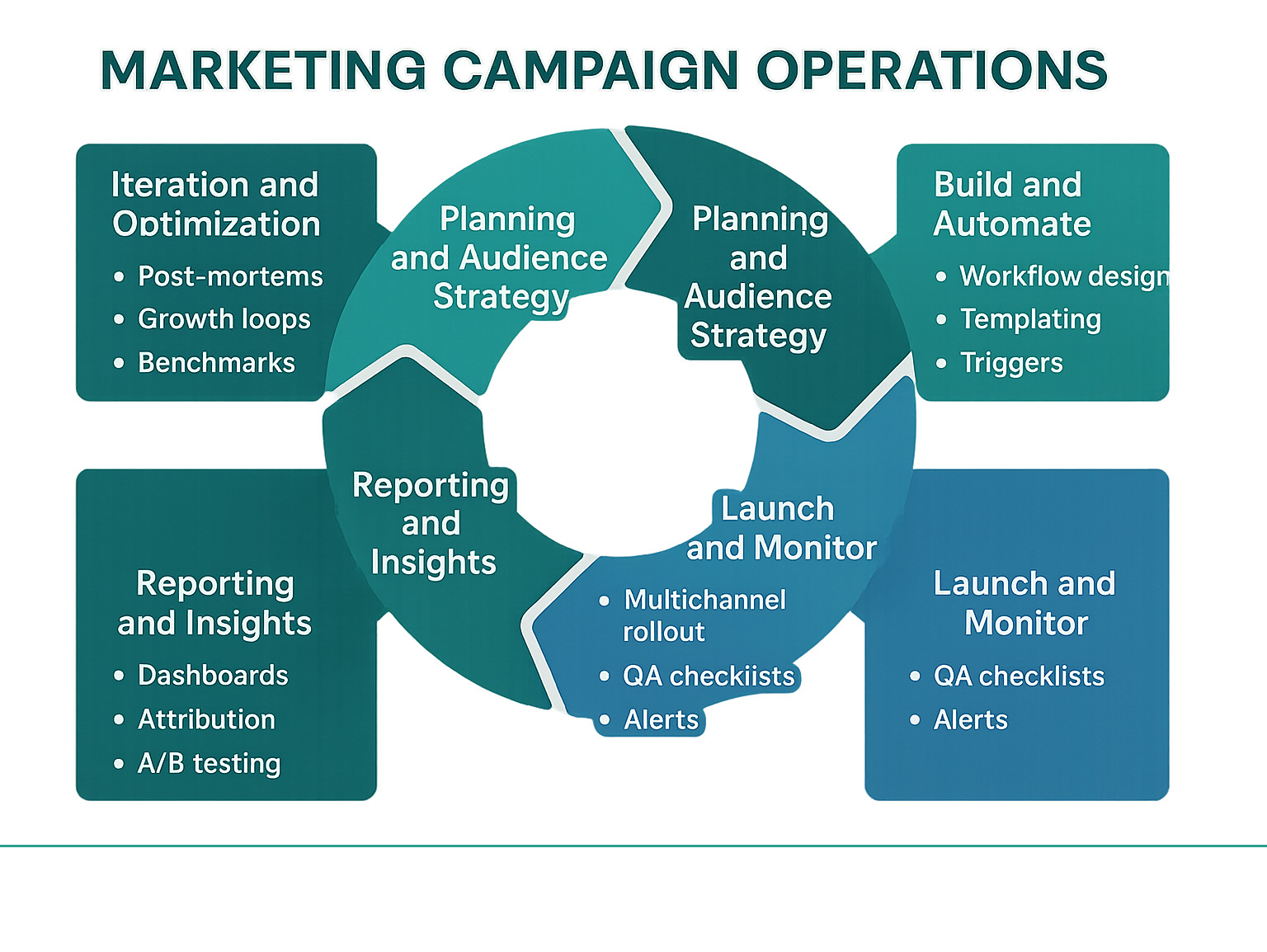
Stage 1 – Planning & Audience Strategy
Setting SMART goals transforms vague objectives like "increase brand awareness" into measurable targets: "generate 500 new MQLs from manufacturing companies with 100+ employees within 90 days."
Audience segmentation becomes your secret weapon. Campaign operations analyzes CRM data to identify patterns—which job titles engage most, which company sizes convert best, and which industries have the shortest sales cycles.
Compliance planning ensures compliance with GDPR, CCPA, and industry regulations from day one, including consent management and data retention policies.
Stage 2 – Build & Automate
Workflow design builds the technical backbone that moves prospects through your funnel automatically - email sequences that adapt based on engagement, lead scoring that gets smarter over time.
Template creation speeds up everything that follows. Campaign operations builds reusable templates for emails, landing pages, and automation sequences that maintain brand consistency while allowing campaign-specific customization.
Trigger logic sets up behavioral triggers responding to actual engagement. Someone downloads your case study? They enter a nurture sequence. If they visit pricing twice? Sales gets an alert.
For deeper execution insights, check out our guide on Campaign Execution: How to Get Your Marketing Campaigns Done.
Stage 3 – Launch & Monitor
Multichannel coordination ensures your message hits all touchpoints simultaneously - email, social posts, and paid ads launch together for a cohesive experience.
Real-time monitoring tracks deliverability, engagement rates, and early conversion signals from the moment you hit send.
Stage 4 – Reporting & Insights
Attribution modeling is crucial for B2B campaigns where buyers research for weeks before converting. Campaign ops sets up multi-touch attribution to understand how different touchpoints work together.
Dashboard creation makes complex data accessible, building executive-friendly dashboards showing campaign performance in business terms, not just marketing metrics.
Stage 5 – Iteration & Optimization
Post-campaign analysis examines what worked, what didn't, and why. This analysis reveals patterns that inform future strategy and helps avoid repeating mistakes.
Growth loops turn campaign results into inputs for future campaigns - survey responses become segmentation criteria, engagement patterns inform content calendars.
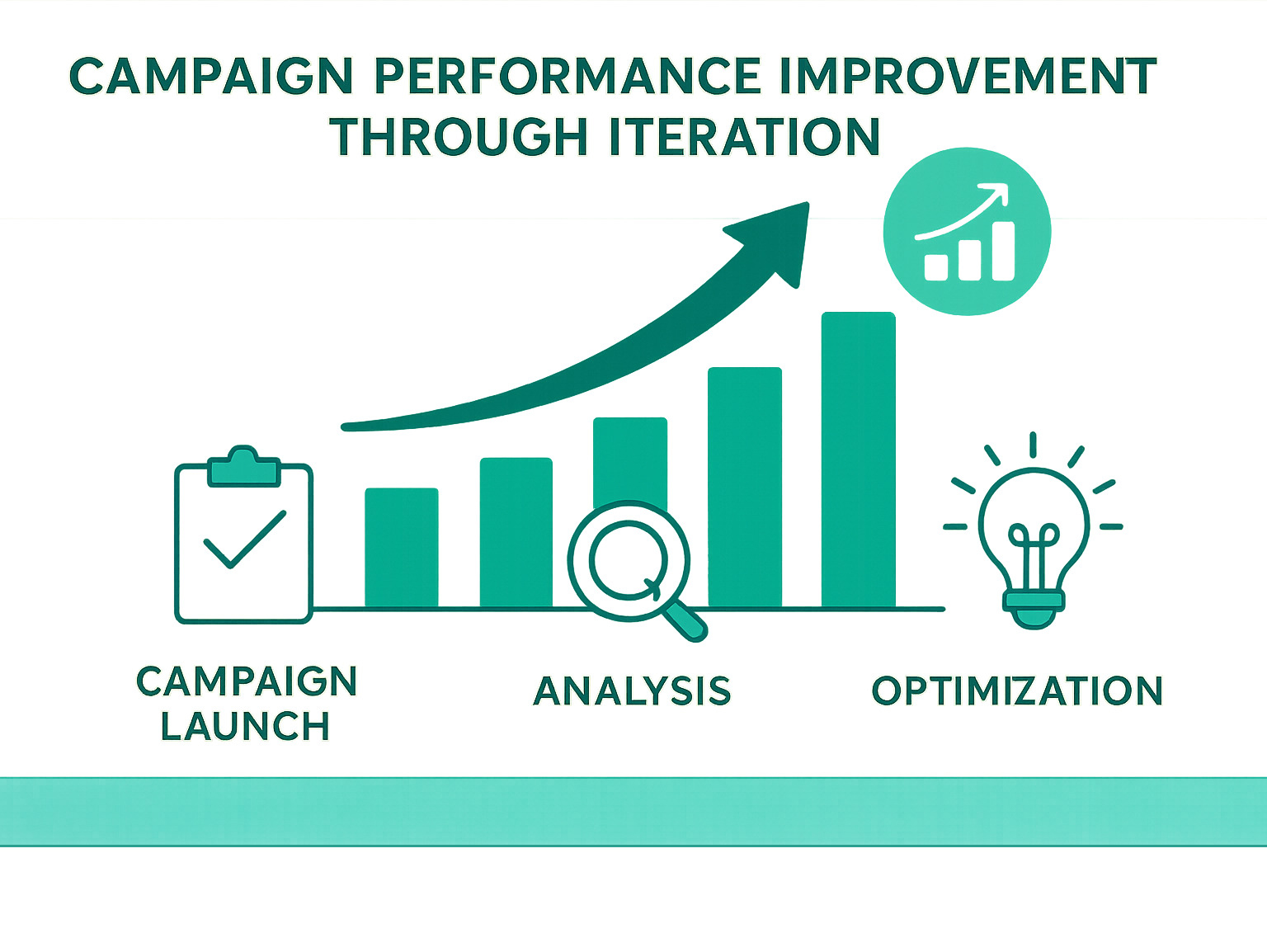
Each stage feeds into the next, creating continuous improvement where your fifth campaign significantly outperforms your first through systematic learning and optimization.
Building a High-Performing Campaign Operations Team
Building your marketing campaign operations team is like assembling a band - each role brings different skills to create something greater than the sum of its parts.
Core roles & responsibilities
The Campaign Operations Manager is your conductor, developing processes and coordinating between teams. They need to speak both "marketing" and "tech" fluently with solid project management skills.
Your Marketing Automation Specialist builds campaign workflows, creates email templates, and sets up automation sequences. Whether using HubSpot, Marketo, or another platform, they make it work seamlessly.
Every team needs a Data Analyst who transforms campaign data into insights. They build meaningful reports, run A/B test analyses, and spot trends that inform next campaign strategies.
The Compliance Champion ensures campaigns stay compliant with GDPR, CCPA, and industry regulations, managing consent and data retention policies.
Collaboration models
The hub and spoke model puts campaign operations at the center, connecting to demand generation, content marketing, and sales teams. This works well for larger organizations juggling multiple campaign types.
The agile squad approach embeds campaign ops professionals within cross-functional teams, enabling lightning-fast decision-making and spontaneous optimization opportunities.
Upskilling & career pathways
Platform certifications keep teams current with marketing automation platforms, CRM systems, and analytics tools. Cross-functional training in content strategy and sales processes cultivates strategically minded team members.
Community engagement through meetups, conferences, and online forums provides valuable knowledge sharing and troubleshooting insights.
For insights on building operational frameworks, explore our Content Operations Framework: A Guide for B2B Teams.
Tech Stack, Automation & Data Governance
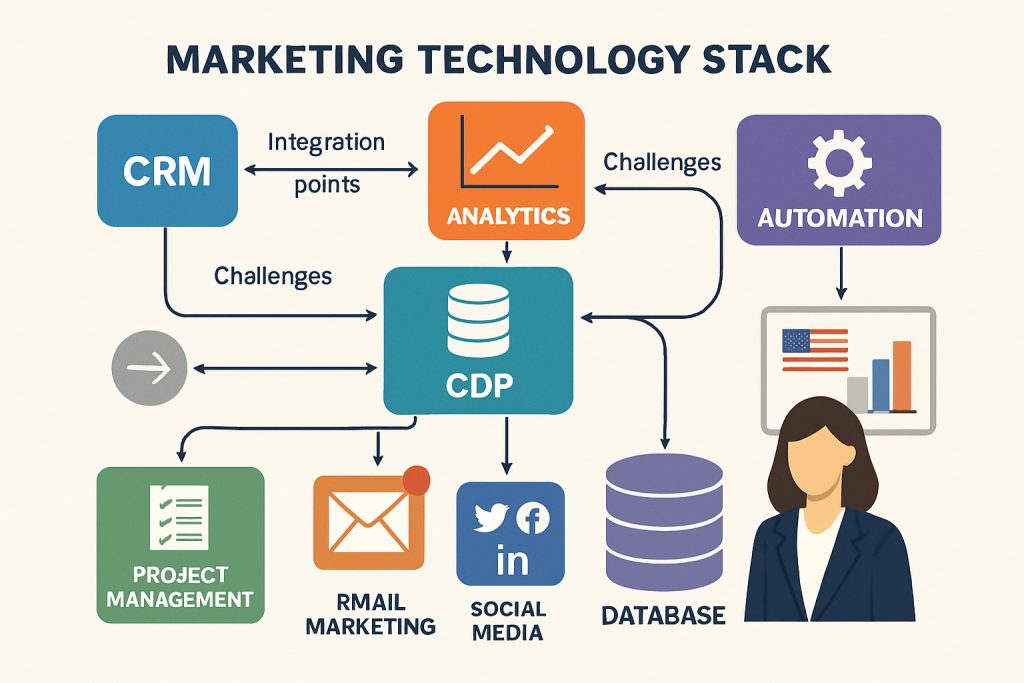
Your technology foundation can make or break your marketing campaign operations. Research shows that 40% of organizations automate campaign operations processes, but success depends on choosing the right tools and setting them up properly.
Essential tools for campaign operations
Your Marketing Automation Platform (MAP) - whether HubSpot, Marketo, or Pardot - handles email delivery, lead nurturing, and behavioral tracking. The key isn't which platform you choose, but how well it integrates with other systems.
Your CRM system serves as the single source of truth for prospect and customer data. Clean CRM data is essential - messy data makes everything downstream messy too.
Customer Data Platforms (CDPs) unify customer information from various touchpoints, enabling sophisticated segmentation and personalization.
Project management tools like Asana or Monday.com coordinate multiple stakeholders, deadlines, and deliverables, keeping campaigns on track.
Analytics and BI tools offer advanced attribution analysis and performance insights that extend beyond basic platform reporting.
Automation best practices
Start simple and build complexity gradually. Begin with straightforward workflows, such as welcome sequences, before adding sophisticated personalization.
Implement error handling with automated alerts for unusual activity and establish clear rollback procedures in case issues arise.
Design for scalability by avoiding hard-coded values and building modular workflows that adapt to evolving needs.
Data compliance & hygiene
Privacy by design means incorporating data protections into campaign workflows from the outset, including effective consent management and straightforward opt-out mechanisms.
Data quality processes require ongoing attention, including regular deduplication, standardized formatting, and updates for missing information.
Compliance workflows should automatically handle personally identifiable information in accordance with regulatory requirements.
Measuring Success: KPIs, Dashboards & Continuous Improvement
Proving marketing campaign operations value requires focusing on metrics that connect marketing activities directly to revenue outcomes.
Must-track metrics & KPIs
Pipeline impact metrics form your measurement backbone. Track Marketing Qualified Leads (MQLs) and their conversion to Sales Qualified Leads, but focus on pipeline value influenced by campaigns to show direct revenue contribution.
Customer Acquisition Cost (CAC) and Customer Lifetime Value (CLV) by channel reveal which campaigns deliver the best long-term value. Time from first touch to opportunity shows how efficiently campaigns move prospects through the buyer journey.
Efficiency metrics demonstrate operational excellence - campaign launch times, email deliverability, and engagement rates reveal your operational health.
Building actionable dashboards
Great dashboards tell stories, not just display numbers. Your executive summary should answer: "Are our marketing investments paying off?" showing pipeline generated, ROI by campaign type, and progress toward goals.
Campaign managers need drill-down capabilities to identify what's working. Real-time operational monitoring helps catch problems before they become disasters.
Iteration frameworks
Test-learn-scale methodology means every campaign includes experiments testing specific hypotheses. The key is being disciplined about statistical significance and scaling successful tests.
Quarterly business reviews examine campaign operations performance in context of broader business objectives, celebrating wins and setting improvement priorities.
For deeper insights on connecting marketing metrics to revenue, explore our guide on RevOps for B2B: What It Is and Why It Matters.
Common Pitfalls in Marketing Campaign Operations & How to Fix Them
Even the best marketing campaign operations teams hit roadblocks. The three biggest culprits are data chaos, slow launch cycles, and attribution confusion. These aren't mysterious technical problems - they're process issues that respond to systematic fixes.
Challenge 1 – Data chaos
Your CRM shows "Acme Corp," "ACME Corporation," and "Acme Co." as separate companies. Duplicate records result in multiple emails being sent to the same person, which can harm deliverability and annoy prospects.
Fix it with data governance: Create standardized data entry protocols, implement regular deduplication processes, and establish data quality monitoring to catch problems early. Companies can significantly improve campaign performance just by cleaning up their data.
Challenge 2 – Slow launch cycles
Campaigns taking weeks instead of days kill marketing momentum. This typically stems from excessive manual processes and unclear approval processes.
Fix it with strategic automation: Build campaign templates for quick customization, create approval workflows that automatically route requests, and develop QA checklists that catch mistakes before launch. Organizations that automate campaign operations processes see faster launch times.
Challenge 3 – Attribution confusion
When email, content, and paid ads teams all claim credit for the same deal, you can't make smart budget decisions or optimize effectively.
Implement unified attribution standards: Choose attribution models that align with your sales cycle, implement multi-touch attribution to give appropriate credit to all touchpoints, and create shared dashboards that show the complete customer journey.
Frequently Asked Questions about Marketing Campaign Operations
What's the difference between campaign ops and demand gen?
Demand generation is your strategic brain trust - figuring out who to target, what messages will resonate, and which offers will convert. They develop buyer personas and campaign concepts.
Campaign operations is your execution engine. Once demand gen has the strategy, campaign ops builds the technical infrastructure, email workflows, audience segments, and automation rules, ensuring flawless launches.
Think of planning a dinner party: demand gen decides the menu and guest list, campaign ops handles the shopping, cooking, and ensures everyone gets fed on time.
Which KPIs prove campaign ops ROI to leadership?
Speed to market shows how operational improvements reduce launch time from weeks to days, creating more opportunities to test and capture market attention.
Pipeline attribution tracks leads from campaigns all the way to closed deals, showing exact revenue impact.
Cost efficiency improvements demonstrate how operational improvements reduce the cost per lead over time through better segmentation and automated workflows.
Connect every operational metric to a business outcome - don't just report improved deliverability, show how it generated more qualified leads.
Conclusion
Marketing campaign operations transforms marketing from a cost center into a predictable revenue driver. Companies that invest in campaign operations (as part of their wider RevOps processes) see higher success rates, faster launches, better sales alignment, and clearer revenue attribution.
Think about where your team stands today. Are you launching campaigns quickly and confidently, or constantly putting out fires? Can you clearly show which marketing activities drive revenue, or are you defending the budget based on vanity metrics?
Marketing campaign operations addresses these challenges by creating the processes, systems, and measurement frameworks that turn marketing into a predictable growth engine.
Start with the basics: clean data, standardized processes, and clear measurement. Then gradually add sophistication as your capabilities grow. The most successful teams pick one area - maybe data quality or launch speed - and improve it systematically before tackling the next challenge.
The B2B marketing landscape will continue evolving, but the need for operational excellence will only grow stronger. Organizations that master campaign operations today will thrive tomorrow, regardless of which new tools or tactics emerge.
Ready to build the operational foundation that transforms your marketing results? We help B2B companies streamline their campaign operations with hands-on, jargon-free expertise focused on real results. Discover how our approach can benefit your team at Marketing Operations Consulting.