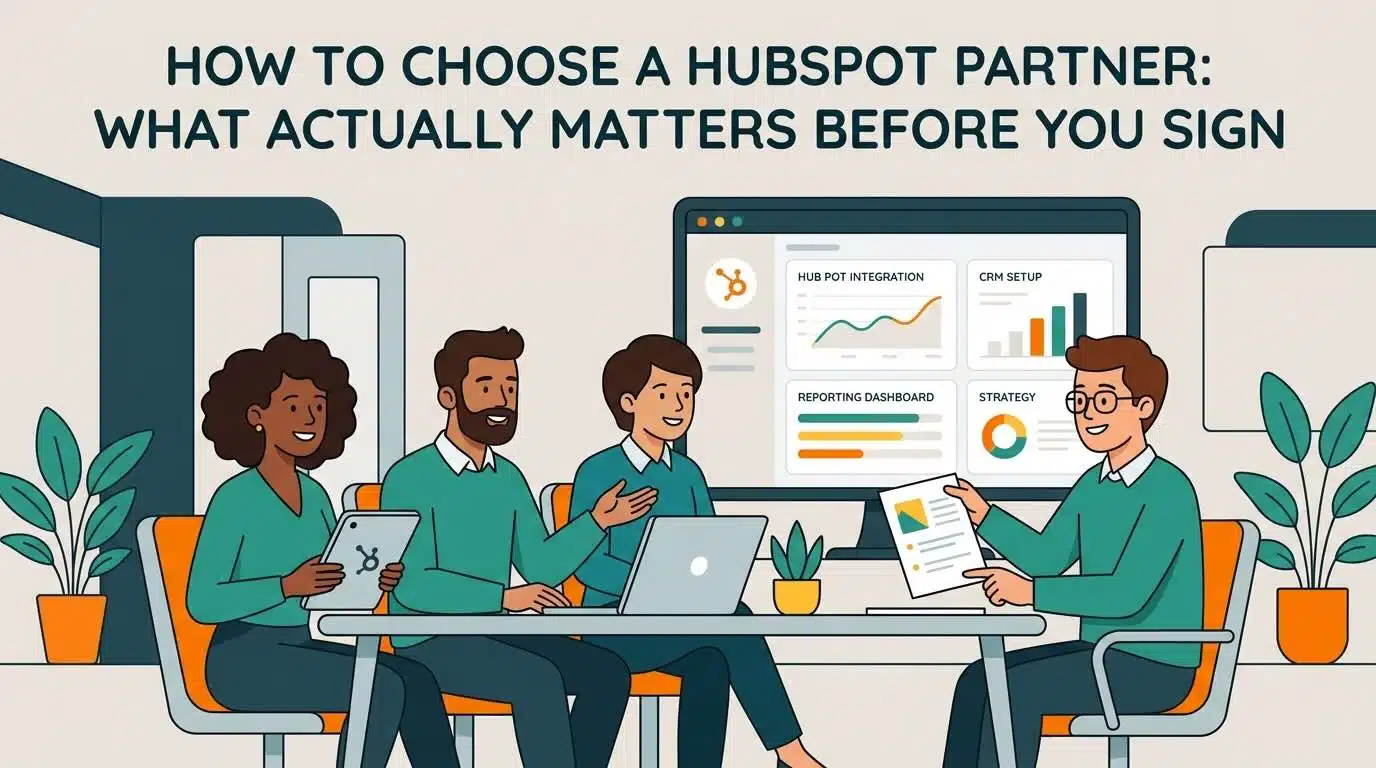
Choosing a HubSpot partner can look easier than it really is.
On paper, most agencies seem to offer the same things: onboarding, implementation, automation, reporting, content, CRM support, and optimization. Many also highlight their partner status, certifications, awards, or team size. Those things can be useful signals, but they are not enough to make a smart decision.
If you are trying to choose a HubSpot partner, the real question is not just whether an agency knows HubSpot. It is whether that agency can help your business use HubSpot well.
That means looking beyond badges and pitch decks and asking harder questions about fit, team structure, execution, and how strategy turns into actual results.
If you are still comparing agency models, our guide to large vs boutique HubSpot Solutions Partners gives helpful context. This article focuses on the decision itself: how to choose the right partner before you sign.
What a HubSpot Partner Should Actually Help You Do
A HubSpot Solutions Partner should do more than configure software.
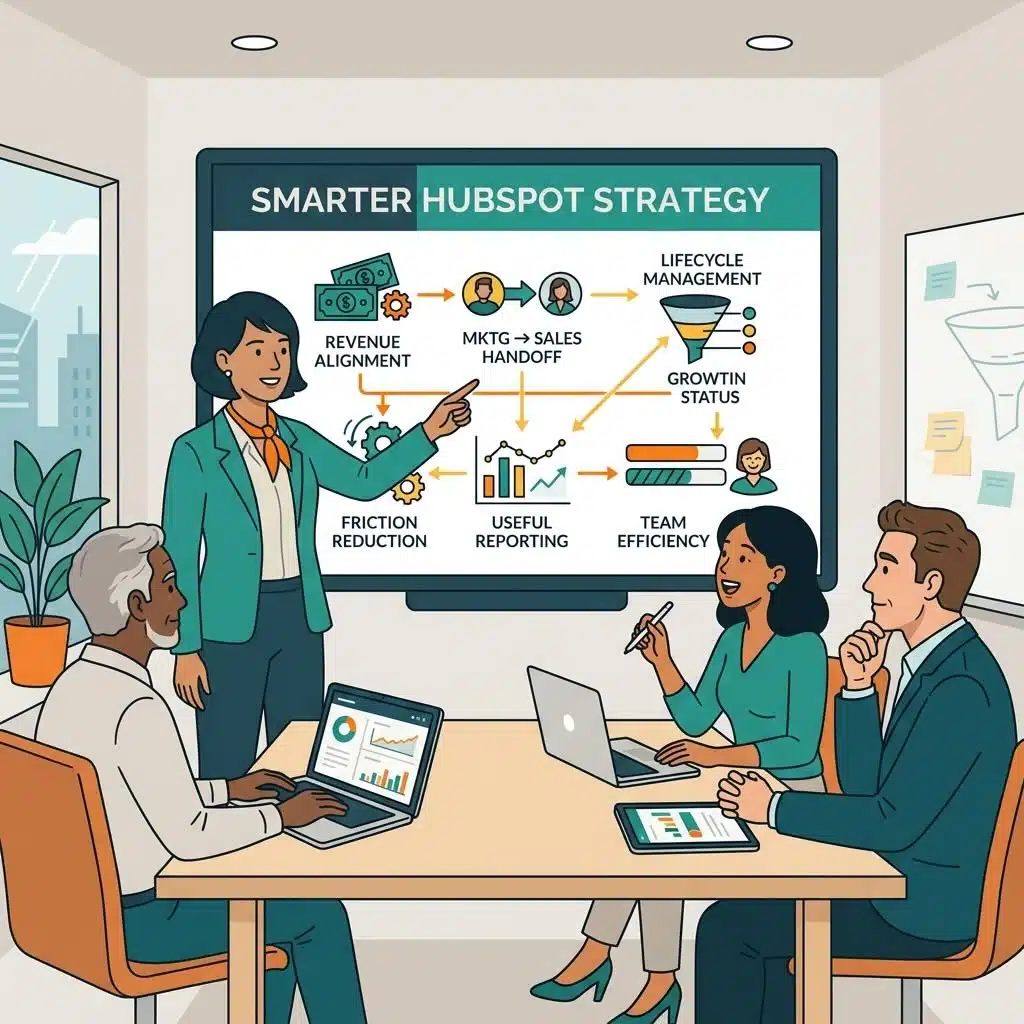
Yes, the tactical work matters. Setup, workflows, lifecycle stages, lead routing, reporting, content, campaigns, and CRM structure all matter. But a strong partner should also help you make smarter decisions about how those pieces fit together.
That includes:
- aligning HubSpot to your revenue model
- improving handoffs between marketing and sales
- tightening lifecycle management
- reducing operational friction
- making reporting more useful
- helping your team work more efficiently over time
If an agency is only talking about tools and tasks, that is a warning sign. HubSpot works best when the strategy behind the setup is sound.
Why Tier, Size, and Polish Are Not Enough When Choosing a Partner
It is easy to over-weight partner tier, headcount, or how polished the sales process feels.
Those things can tell you something. They just do not tell you enough.
A higher-tier partner may bring scale, structure, and breadth. A smaller partner may bring speed, senior attention, and tighter alignment. Neither model is automatically better. What matters is how the work gets done and whether that way of working fits your business.
The same is true of sales polish. A great pitch is not the same thing as a great delivery experience.
That is why choosing a HubSpot partner should be less about optics and more about operating model.
If partner tier is playing too big a role in your shortlist, this article on what HubSpot partner tier really means will help you weigh it more realistically.
If you are building a shortlist, the HubSpot partner directory can be a useful starting point, but it should not be the only filter you use.”
7 Questions to Ask Before You Choose a HubSpot Partner
1. Who will actually be working on my account?
Do not stop at job titles. Ask who will own strategy, implementation, reporting, workflows, optimization, and communication.
You want to understand:
- who you will meet with regularly
- who is making decisions
- who is doing the work
- how senior people stay involved after kickoff
This is one of the clearest ways to avoid paying for senior strategy but junior execution.
2. How do you tailor strategy for different business models?
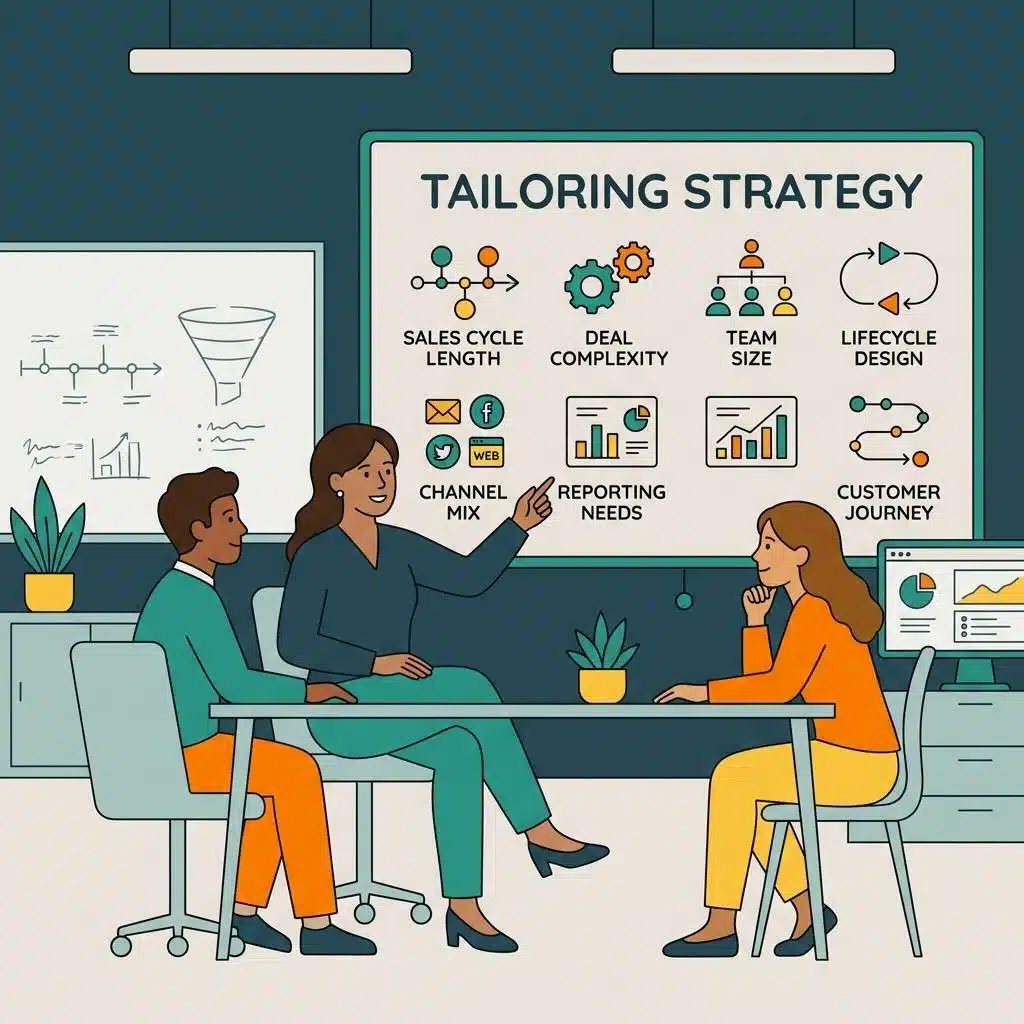
A good partner should be able to explain how its approach changes based on:
- sales cycle length
- deal complexity
- team size
- lifecycle design
- channel mix
- reporting needs
- customer journey
If the answer sounds too generic, the execution may be too generic too.
3. How does work move from strategy into execution?
This question matters more than many buyers realize.
Ask:
- how are decisions documented?
- how are handoffs managed?
- how are priorities communicated?
- what happens when the strategy needs to change?
The more distance there is between planning and execution, the more room there is for drift.
4. What tends to slow down delivery?
This is a simple question that can reveal a lot.
Every partner has constraints. The issue is not whether they exist. The issue is whether the agency understands them and communicates clearly about them.
You want an honest answer, not a perfect-sounding one.
5. How do you measure success?
If the answer is mostly activity-based, keep digging.
A strong partner should connect work to business outcomes such as:
- lead quality
- speed to follow-up
- lifecycle movement
- funnel conversion
- pipeline contribution
- revenue visibility
- operational efficiency
That does not mean every engagement ties directly to revenue overnight. It does mean the partner should understand what success looks like beyond task completion.
6. What does communication actually look like?
Ask:
- how often will we meet?
- who joins the calls?
- how fast do you usually respond?
- how are requests handled?
- how do urgent issues get escalated?
Communication is not a soft factor. It affects speed, trust, and execution quality.

7. How do you handle situations where something is not working?
This is one of the most revealing questions you can ask.
Good partners do not just talk about what happens when everything goes well. They can explain how they diagnose problems, change direction, and course-correct without losing momentum.
For a more practical companion checklist, see questions to ask before hiring a HubSpot agency.
What to Look for to Choose a Strong HubSpot Partner
Beyond the questions above, here are the qualities worth prioritizing when choosing a HubSpot Partner.
Strategic depth
They understand more than HubSpot features. They understand systems, process, funnel design, handoffs, and business impact.
Clear ownership
You know who is responsible for what. Nothing feels vague, over-layered, or hidden behind process.
Practical thinking
The advice feels grounded and usable, not abstract or overly theoretical.
Adaptability
They can follow a process without forcing your business into a rigid template.
Good communication
They are responsive, clear, and direct before you sign. That usually tells you a lot about what the relationship will feel like later.
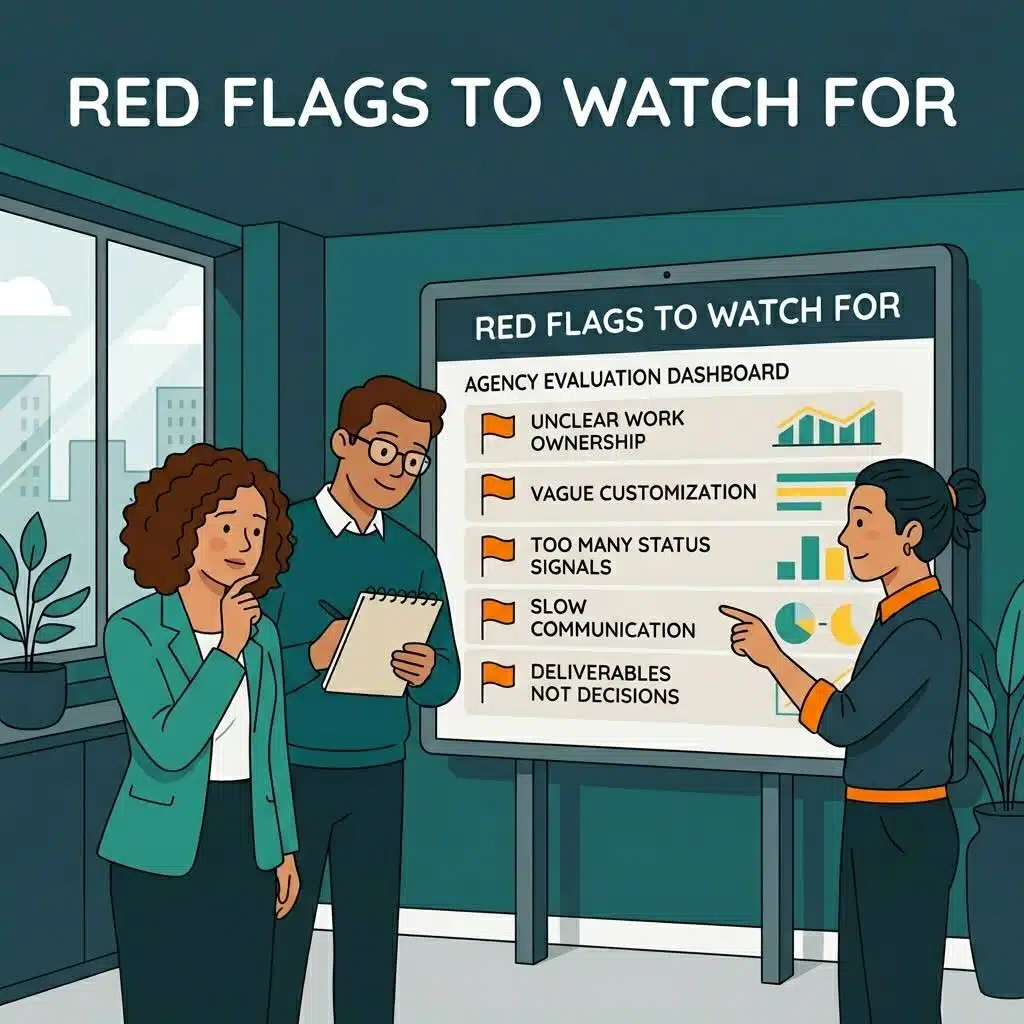
Red Flags to Watch For When Choosing a HubSpot Partner
A few patterns should make you slow down.
The team is still unclear after the sales process
If you still do not know who will own the work, that is a problem.
Everything sounds customized, but nothing sounds specific
If the agency promises flexibility but cannot explain how it adapts its approach, be careful.
The pitch leans too heavily on status signals
Partner tier, awards, and certifications can support credibility. They should not replace a clear explanation of how the agency will help your business.
Communication already feels slow or filtered
The early buying process is often the best version of the relationship. Pay attention to what that experience already feels like.
The agency talks mostly about deliverables, not decisions
HubSpot success is not just about getting things built. It is about building the right things, in the right order, for the right reasons.
Choosing a HubSpot Partner: Boutique vs. Large: Which Is Better?
That depends on what you need.
A boutique agency may be a better fit if you want:
- closer access to senior people
- faster iteration
- tighter strategy-to-execution alignment
- a more flexible working relationship
A larger agency may be a better fit if you need:
- enterprise-level coordination
- broader resourcing
- more formal process
- support across a larger, more complex scope
If this is the comparison you are actively weighing, these related guides may help:
- What is the difference between a boutique HubSpot agency and a large HubSpot agency?
- Is a big HubSpot partner better?
- What HubSpot partner tier really means
Final Checklist Before You Choose a HubSpot Partner
Before signing with a HubSpot partner, make sure you can answer these questions clearly:
- Do I know who will actually work on the account?
- Do I understand how strategy becomes execution?
- Do I trust the agency’s communication style?
- Does the team understand our business model and process?
- Does the operating model fit how we need to work?
- Are we choosing based on fit, not just status?
If not, keep asking questions.
When you choose a HubSpot partner, look for a firm that makes the path forward feel clearer, not more confusing.
If you want a second opinion before you commit, start with a HubSpot audit or book a fit assessment.